Protein Cycling: Strategic Protein Intake for Muscle Growth and Longevity

You’ve been hitting the gym consistently, eating your protein-packed meals, and tracking your macros down to the gram. But what if constantly flooding your body with the same amount of protein isn’t the optimal strategy? Enter protein cycling—a strategic approach to protein intake that alternates between high and low consumption periods to potentially maximize both muscle growth and longevity. This emerging strategy is turning heads in both fitness and longevity circles, challenging the conventional wisdom of steady, daily protein targets.
What Is Protein Cycling and How Does It Work
Protein cycling is a strategic protein intake approach that involves intentionally varying your protein consumption over specific time periods rather than maintaining a constant daily amount. Unlike traditional nutrition advice that recommends eating roughly the same amount of protein every day, cycling protein consumption creates deliberate fluctuations between high-protein periods (typically 1.6-2.2g per kg bodyweight) and low-protein periods (0.8-1.2g per kg bodyweight).
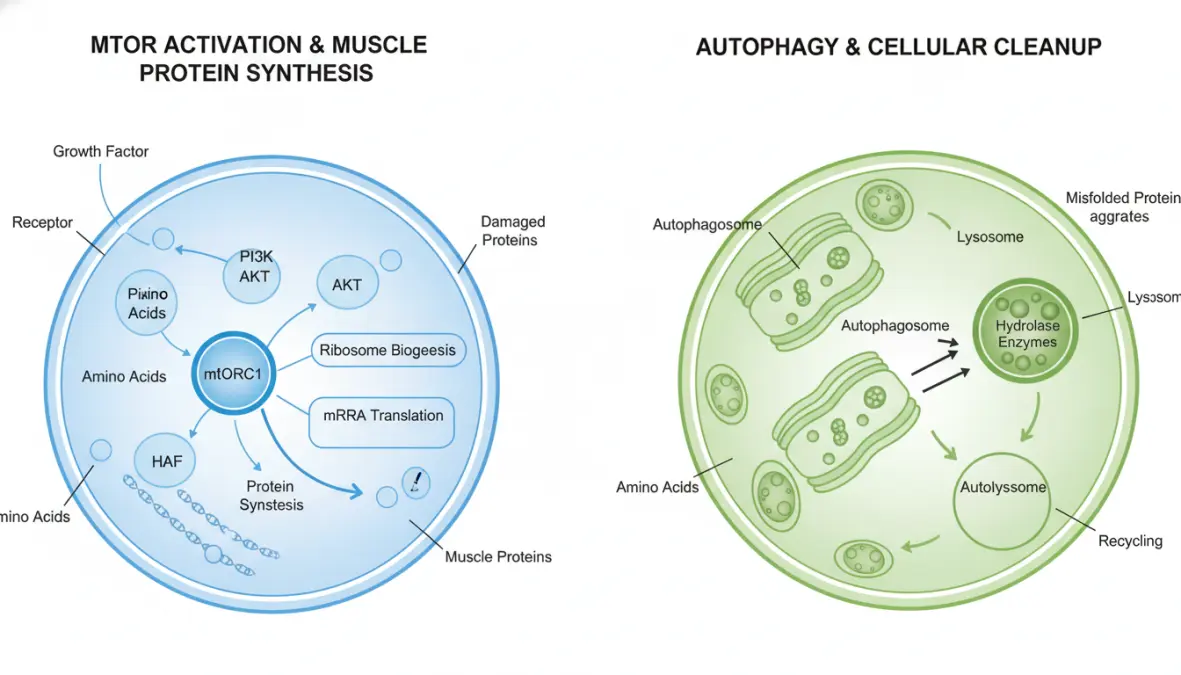
The biological rationale centers around two critical cellular pathways: the mTOR (mechanistic target of rapamycin) pathway and autophagy. High protein intake, particularly foods rich in the amino acid leucine, activates mTOR—your body’s primary growth signal that stimulates muscle protein synthesis. Conversely, periods of reduced protein intake allow mTOR to downregulate, activating autophagy, a cellular “housekeeping” process that clears damaged proteins and organelles.
This differs significantly from constant protein intake, which keeps mTOR chronically activated. While this seems ideal for muscle building, research suggests that continuous activation may lead to receptor desensitization and reduced responsiveness over time. Various approaches to protein cycling exist: some practitioners alternate high and low days (3-4 days high, 2-3 days low), while others focus on protein timing within the day through intermittent protein fasting. The concept gained traction as longevity researchers discovered that periodic amino acid restriction activates beneficial stress-response pathways associated with extended healthspan.
The Science Behind Protein Cycling: Muscle Synthesis and Longevity Benefits
Understanding how to cycle protein for muscle growth and longevity requires examining the dual benefits this strategy offers. The science reveals a fascinating interplay between anabolic (building) and catabolic (breaking down) processes that, when properly orchestrated, may deliver superior results compared to traditional approaches.
How Protein Cycling Optimizes Muscle Protein Synthesis
The concept of protein synthesis optimization through cycling addresses a phenomenon called the “muscle full effect” or refractory period. Research indicates that after approximately 3-5 hours of elevated muscle protein synthesis following a protein-rich meal, muscles become temporarily resistant to further stimulation, even if additional protein is consumed. More importantly, some evidence suggests that chronically elevated protein intake may lead to decreased sensitivity to anabolic signals over time.
By strategically implementing lower-protein days, you essentially “reset” your body’s sensitivity to dietary protein. When you return to high-protein periods, your muscles may respond more robustly to the leucine threshold—the approximately 2-3 grams of leucine needed to maximally stimulate protein synthesis. This enhanced sensitivity could theoretically allow for greater muscle hypertrophy from the same amount of protein compared to constant intake.
Studies on protein timing have shown that the so-called anabolic window isn’t as narrow as once believed, but strategic distribution still matters. The cycling approach leverages both the immediate post-workout sensitivity and the broader recovery windows throughout training blocks. The key question—does protein cycling work for muscle building—remains under investigation, but preliminary evidence suggests it may prevent the metabolic adaptation that occurs with unchanging nutritional patterns.
Longevity Pathways Activated Through Strategic Protein Variation
The longevity benefits of protein for longevity through cycling stem from activating cellular stress-resistance pathways. During low-protein periods, particularly with amino acid restriction, mTOR activity decreases while AMPK (AMP-activated protein kinase) increases. This metabolic switch triggers autophagy—essentially your cells’ recycling program that removes dysfunctional components and may protect against age-related diseases.
Research featured in recent longevity science breakthroughs demonstrates that periodic amino acid restriction activates sirtuins and other longevity-associated genes. These proteins regulate cellular health, DNA repair, and stress resistance. The best protein cycling schedule for longevity appears to balance sufficient protein for muscle maintenance with periodic restriction for cellular renewal.
This creates an interesting paradox: continuous mTOR activation promotes growth but may accelerate aging, while excessive restriction promotes longevity but risks muscle loss. Protein cycling benefits for aging populations may be particularly significant, as it allows older adults to maintain muscle mass (critical for healthspan) while still accessing the anti-aging benefits of periodic restriction. The strategic alternation promotes metabolic flexibility—your body’s ability to efficiently switch between fuel sources and metabolic states.

Implementing a Protein Cycling Strategy: Practical Approaches and Protocols
Translating theory into practice requires a structured protein intake strategy tailored to your goals and lifestyle. Several protocols have emerged, each with distinct advantages depending on whether you prioritize muscle building, longevity, or both.
The 4:3 Weekly Protocol involves four consecutive high-protein days (1.8-2.2g per kg bodyweight) aligned with your primary training days, followed by three lower-protein days (0.9-1.2g per kg) during rest or lighter activity days. This approach works well for serious athletes and addresses the question of how much protein when cycling for results: enough to maximize training adaptations while incorporating restorative low periods.
The Meal-Based Approach focuses on strategic protein timing within each day rather than day-to-day variation. This might involve concentrating protein in two larger meals separated by 4-6 hours, with extended fasting periods between. This method provides daily autophagy activation windows while still hitting adequate total protein for muscle maintenance.
The Monthly Cycle alternates 2-3 weeks of higher protein intake with one week of moderate restriction, mimicking ancestral feast-and-famine patterns. This suits those seeking primarily longevity benefits who train recreationally rather than competitively.
Monitoring results requires tracking both body composition and performance metrics. Common mistakes include dropping protein too low (risking muscle loss), not aligning high-protein days with training, or failing to ensure adequate calories during low-protein phases (which can trigger unwanted metabolic slowdown). Athletes and active individuals generally tolerate protein cycling well, as do older adults seeking to balance muscle preservation with longevity. However, those with eating disorders, pregnant or nursing women, and growing adolescents should maintain more consistent intake.
When selecting protein sources, consider both quality and digestibility. Conventional options like lean meats, fish, eggs, and dairy work excellently, though some practitioners explore alternatives like insect protein from crickets and mealworms, which offer complete amino acid profiles with lower environmental impact.
FAQ: Common Questions About Protein Cycling
Is protein cycling safe for everyone?
Protein cycling is generally safe for healthy adults, particularly active individuals and those seeking longevity benefits. However, it’s not recommended for pregnant or nursing women, adolescents still growing, individuals recovering from illness or injury, or those with a history of eating disorders. Older adults can benefit but should ensure low-protein days don’t drop below 1.0g per kg to prevent muscle loss. Always consult a healthcare provider before making significant dietary changes.
How much protein should I eat on high vs low days?
High days typically involve 1.6-2.2g of protein per kilogram of bodyweight, aligned with training days to maximize muscle protein synthesis. Low days range from 0.8-1.2g per kg, sufficient for maintenance while allowing autophagy activation. A 75kg person would consume roughly 120-165g on high days and 60-90g on low days. The exact amounts depend on training intensity, age, and whether muscle gain or longevity is your primary goal.
Can protein cycling cause muscle loss?
When implemented correctly with adequate overall calories and strategic timing around training, protein cycling shouldn’t cause muscle loss. The key is ensuring low-protein days still meet minimum requirements (around 0.8-1.0g per kg) and scheduling them during rest days when synthesis demands are lower. Studies comparing protein cycling vs constant protein intake show similar muscle maintenance when weekly totals are equivalent and training is consistent.
How does protein cycling differ from intermittent fasting?
While both strategies involve periodic restriction, intermittent fasting focuses on when you eat (time-restricted feeding), whereas protein cycling focuses on what macronutrient you’re modulating. You can practice both simultaneously through strategic protein timing for autophagy—concentrating protein intake in specific windows while maintaining fasting periods. Intermittent fasting restricts all calories; protein cycling specifically varies protein while maintaining adequate total energy intake.
What are the best protein sources for cycling protocols?
Prioritize complete proteins rich in leucine for high days: lean meats, fish, eggs, Greek yogurt, and whey protein. These maximize the leucine threshold needed for muscle protein synthesis. On low-protein days, choose nutrient-dense options that provide other benefits: legumes, quinoa, vegetables with moderate protein content. Plant-based proteins work well for both phases, though you may need larger quantities to achieve leucine targets on high days due to lower bioavailability.
Protein cycling represents a paradigm shift from the “more is always better” mentality toward a more nuanced understanding of how strategic variation can optimize both performance and health. Whether you’re an athlete seeking every competitive edge or someone prioritizing longevity alongside fitness, this approach offers a science-backed framework worth exploring. Start with one protocol, track your results objectively, and adjust based on how your body responds—because ultimately, the best nutrition strategy is one that delivers measurable results while fitting sustainably into your lifestyle.