Seed Cycling for Hormones: Does This Natural Protocol Actually Work?
If you’ve been hanging out in wellness circles lately, you’ve probably heard whispers about seed cycling hormones—a natural approach that claims to regulate your menstrual cycle, ease PMS symptoms, and even boost fertility just by eating specific seeds at different times of the month. Sounds almost too simple to be true, right? But thousands of women swear by this practice, reporting smoother cycles, clearer skin, and fewer hormonal mood swings. So what’s the real deal? Let’s dig into the science, separate fact from wishful thinking, and figure out if this seed rotation diet deserves a spot in your wellness routine.
What Is Seed Cycling and How Does It Work?
At its core, the seed cycling protocol is a natural hormone regulation strategy that involves eating specific seeds during different phases of your menstrual cycle. The idea is to support your body’s natural hormonal fluctuations—particularly estrogen dominance and progesterone levels—through strategic nutritional support.
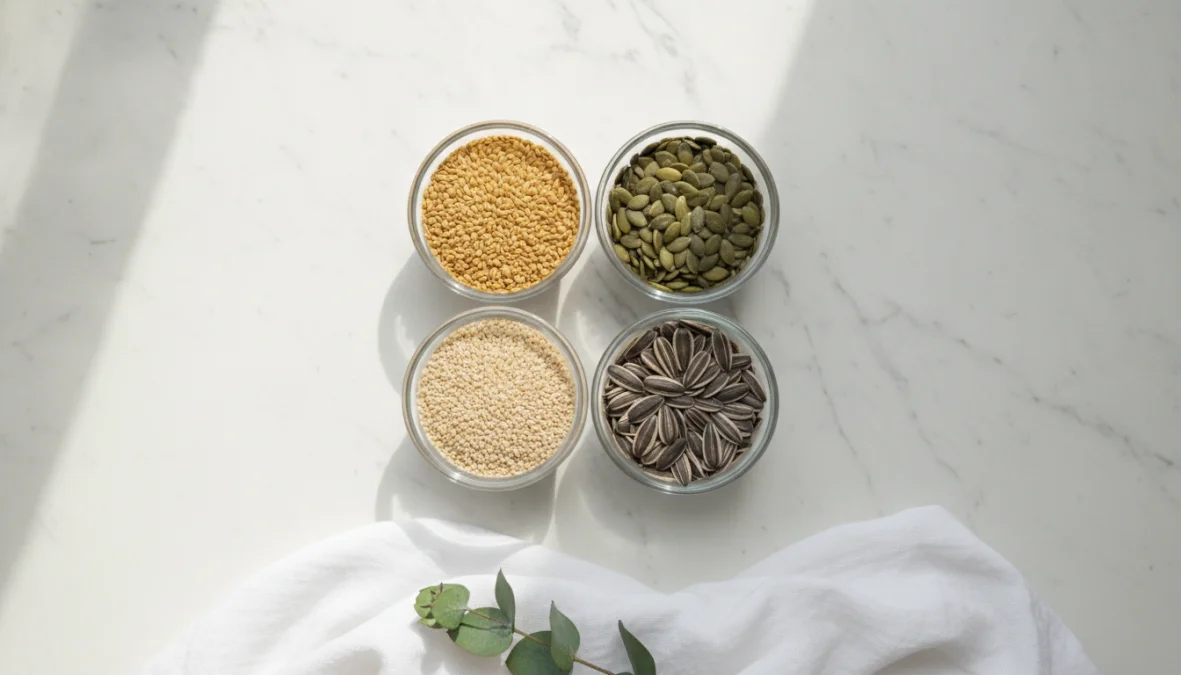
Here’s how the seed rotation diet breaks down: During the follicular phase (days 1-14 of your cycle, starting with day 1 as the first day of menstruation), you consume 1-2 tablespoons daily of freshly ground flaxseeds and pumpkin seeds. These hormone balancing seeds are rich in phytoestrogens and flaxseed lignans that gently support estrogen production during the first half of your cycle. The pumpkin seeds zinc content also helps prepare the body for ovulation.
Then, during the luteal phase (days 15-28), you switch to sesame and sunflower seeds. These menstrual cycle seeds contain nutrients that support progesterone production and help block excess estrogen, creating better hormonal balance as your body prepares for either menstruation or potential pregnancy.
For those wondering how to do seed cycling for hormone balance with irregular periods or during menopause, you can sync with the moon cycle instead—eating pumpkin and flax during the new moon (follicular equivalent) and sesame and sunflower during the full moon (luteal equivalent). Women experiencing seed cycling during menopause symptoms often follow this lunar approach since they no longer have a regular menstrual cycle to track.
The Science Behind Seed Cycling: Evidence and Limitations
Let’s be honest: when you search for scientific evidence for seed cycling, you won’t find randomized controlled trials specifically testing this complete protocol. That’s the biggest limitation. However, what we do have is compelling research on the individual components—the seeds themselves and their nutritional powerhouses.
Flaxseeds are scientifically proven superstars. Their lignans have been shown to help modulate estrogen metabolism, potentially reducing estrogen dominance and supporting hormonal balance. Studies have found that flaxseed consumption can lengthen the luteal phase and reduce anovulatory cycles in some women. Meanwhile, the omega-3 fatty acids in both flax and pumpkin seeds provide anti-inflammatory benefits that can ease menstrual cramping and PMS symptoms.
The pumpkin seeds zinc connection is equally impressive—zinc is crucial for progesterone production and plays a vital role in fertility. Sesame seeds are packed with lignans and vitamin E, while sunflower seeds offer selenium, another mineral important for hormone production and thyroid health.
The theoretical framework makes sense: these seeds contain nutrients that support the hormonal shifts your body naturally undergoes. The gap is simply that no one has studied them together as a complete seed cycling protocol. Much like wild swimming benefits that combine multiple physiological responses into one practice, seed cycling may offer synergistic effects beyond its individual components.
Potential Benefits and Reported Results
While waiting for formal research, thousands of women report meaningful seed cycling results after consistent practice. Common seed cycling benefits include:
- Menstrual cycle regulation: Women with irregular periods report more predictable cycles after 3-6 months
- Reduced PMS symptoms: Less bloating, fewer mood swings, and diminished breast tenderness
- Improved fertility: Those exploring seed cycling for PCOS and fertility report better ovulation patterns
- Menopausal support: Gentler hot flashes and more stable energy levels
- Clearer skin: Fewer hormonal breakouts, especially around menstruation
- Better energy levels: More stable moods throughout the month
The critical factor? Consistency. Most practitioners emphasize you need at least three full cycles (about 90 days) to notice significant changes. This isn’t a quick fix—it’s a gradual recalibration.
Who Should (and Shouldn’t) Try Seed Cycling
The seed rotation diet is generally safe for most women, especially those dealing with mild hormonal imbalances, irregular periods, PMS, or perimenopause symptoms. It’s a low-risk intervention that adds nutrient-dense foods to your diet—there’s little downside beyond the effort required.
However, seed cycling shouldn’t replace medical treatment for serious hormonal conditions. If you have diagnosed conditions like endometriosis, severe PCOS, thyroid disorders, or are undergoing fertility treatments, consult your healthcare provider first. Those with seed or nut allergies obviously need to avoid this protocol. And if you’re on hormonal birth control, the effects may be minimal since synthetic hormones override your natural cycle.
Think of seed cycling as a complementary practice—something you add to an already healthy lifestyle foundation, much like how we approach wellness holistically in other areas of health.
How to Start Your Seed Cycling Protocol
Ready to give it a try? Here’s your practical guide to implementing the seed cycling protocol without overthinking it.
Step 1: Get your seeds. Buy organic, raw seeds when possible: flaxseeds, pumpkin seeds (pepitas), sesame seeds, and sunflower seeds. Store them in airtight containers in the fridge or freezer to prevent oxidation.
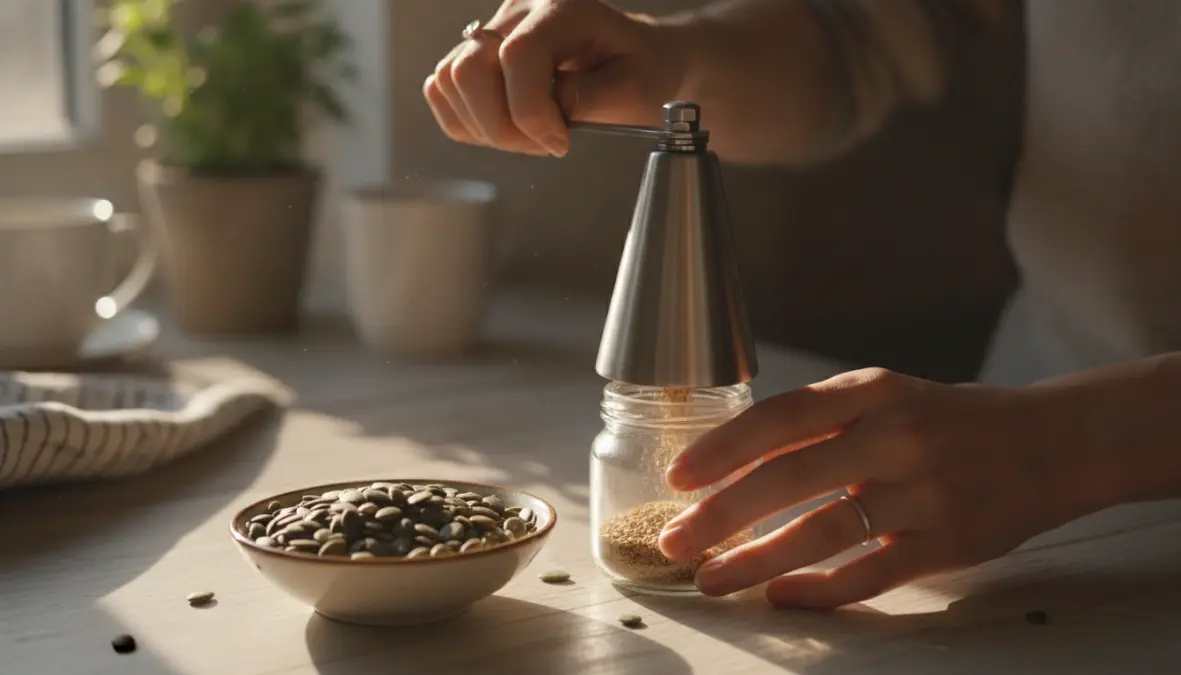
Step 2: Grind daily. This is crucial, especially for flaxseeds—whole seeds pass through your digestive system intact. Use a coffee grinder or high-speed blender to grind fresh each day (or every few days, storing ground seeds in the fridge).
Step 3: Track your cycle. Use a period tracking app or simple calendar. Day 1 is the first day of your period. If your cycle is irregular or you’re in menopause, pick a consistent start date (like the new moon).
Step 4: Incorporate creatively. The beauty of menstrual cycle seeds is their versatility. Try these ideas:
- Blend into morning smoothies
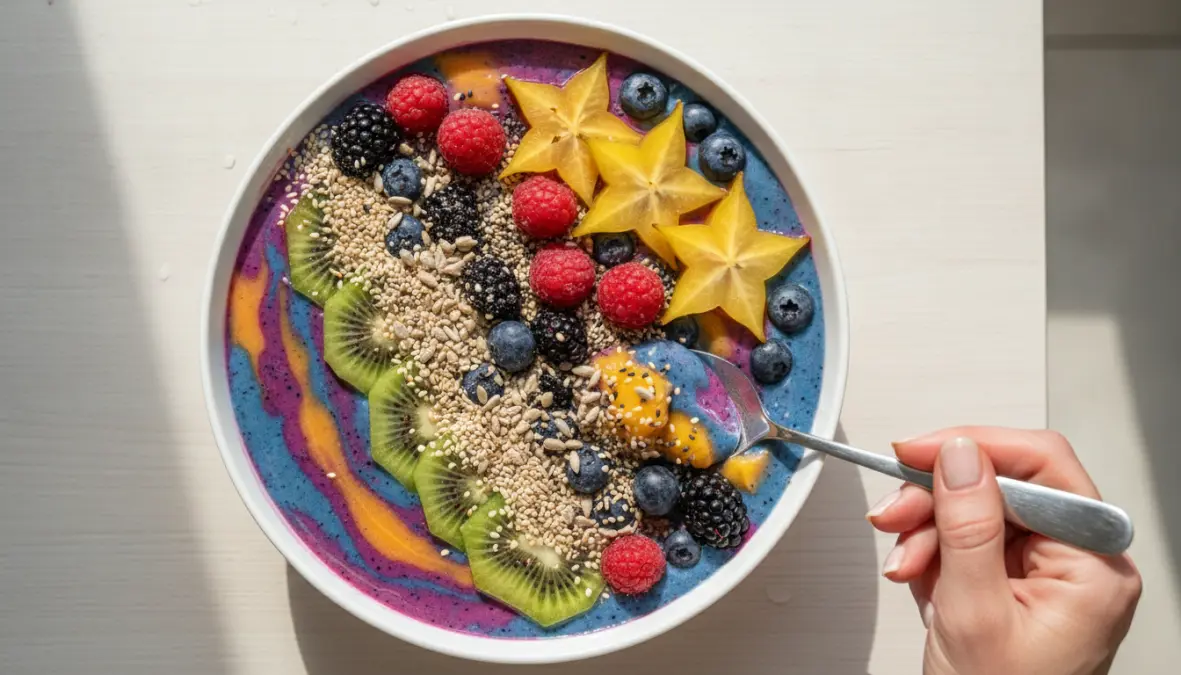
- Sprinkle over yogurt, oatmeal, or acai bowls
- Mix into salad dressings or pesto
- Add to energy balls or homemade granola bars
- Stir into soups or grain bowls
Step 5: Be consistent. Aim for 1-2 tablespoons daily of your phase-appropriate seed combination. Set a phone reminder if needed. Missing a day won’t derail everything, but consistency over months matters most when you’re seeking seed cycling results.
Your simple weekly template: Days 1-14 (or new moon to full moon): 1 tablespoon ground flaxseeds + 1 tablespoon pumpkin seeds daily. Days 15-28 (or full moon to new moon): 1 tablespoon ground sesame seeds + 1 tablespoon sunflower seeds daily.
What to expect: Don’t anticipate overnight miracles. The first month might feel like nothing’s happening. By month two or three, you may notice subtler shifts—perhaps your PMS symptoms arrive later or feel less intense, or your cycle length becomes more predictable. For those exploring seed cycling for irregular periods treatment, patience is essential. Your body needs time to respond to these gentle nutritional signals.
Is seed cycling a scientifically proven cure-all? No. Is it a potentially beneficial, low-risk nutritional practice rooted in the documented properties of nutrient-dense seeds? Absolutely. Whether you’re dealing with hormonal acne, exploring does seed cycling actually work for hormones, or simply want to support your body’s natural hormone regulation, this protocol offers a food-first approach worth trying. Track your experience, listen to your body, and remember that hormonal health—much like the broader wellness conversations we have around topics from women’s health empowerment to holistic self-care—is deeply personal. What works beautifully for one woman might do nothing for another, and that’s completely okay. Give it three months, stay curious, and see what shifts for you.