The Posture Epidemic: How Modern Life Is Destroying Your Spinal Health
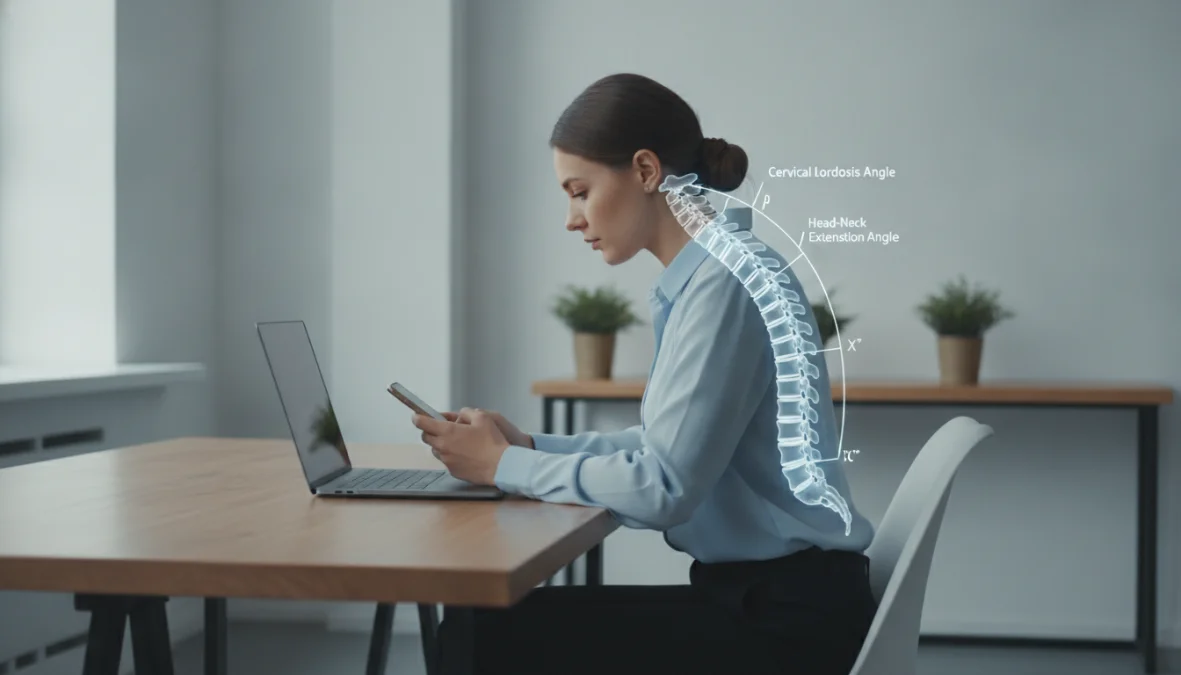
Right now, as you’re reading this, there’s a good chance your shoulders are hunched forward, your head is jutting out toward the screen, and your lower back is crying for help. Don’t worry—you’re not alone. Posture problems modern life has become one of the most pervasive health issues of our generation, affecting everyone from office workers to teenagers glued to their smartphones. We’re witnessing a silent epidemic that’s literally reshaping our spines, one screen hour at a time.
The Modern Posture Crisis: Understanding How Technology and Sedentary Habits Are Reshaping Our Spines
The statistics are staggering: the average person spends over 11 hours per day interacting with screens, and office workers can clock up to 15 hours sitting—more time than we spend sleeping. Our bodies, designed for hunting, gathering, and constant movement, are now imprisoned in chairs and couches, staring at glowing rectangles. This dramatic shift in how we live is creating what experts call modern lifestyle posture issues at an unprecedented scale.
Over the past two decades, as smartphones became ubiquitous and desk jobs replaced manual labor, healthcare professionals have documented an alarming surge in postural dysfunction. The tech neck epidemic alone has increased musculoskeletal complaints in patients under 30 by nearly 50%. We’re seeing conditions that used to affect primarily elderly individuals—like cervical spine alignment problems and thoracic kyphosis—showing up in teenagers and young adults.
The main culprits? Forward head posture, where your head protrudes forward beyond your shoulders; rounded shoulders that collapse inward; and anterior pelvic tilt that throws your entire spine out of alignment. These conditions aren’t just cosmetic concerns—they’re the visible manifestations of spinal health deterioration that can lead to chronic pain, reduced mobility, and long-term structural damage. The question isn’t why is posture worse in modern society, but rather how quickly can we address it before irreversible damage sets in.
The Biomechanics of Postural Deterioration: What Sitting, Screens, and Sedentary Living Do to Your Spine
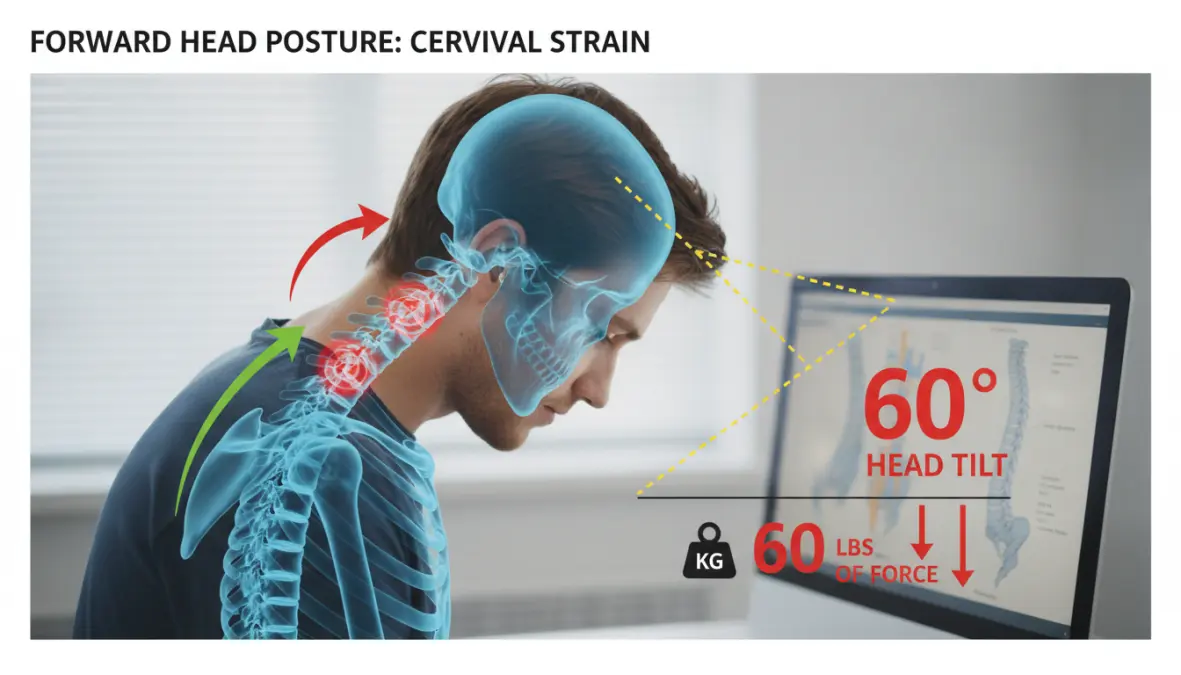
Understanding how does modern life affect posture requires looking at the biomechanics at play. Here’s a sobering fact: for every inch your head moves forward from its neutral position, it adds approximately 10 pounds of extra pressure on your cervical spine. When you’re looking down at your phone, your head can tilt 60 degrees forward, creating up to 60 pounds of force on your neck. That’s like carrying an 8-year-old child on your shoulders all day, every day.
The sitting disease spine phenomenon is equally destructive. When you sit for extended periods, especially with poor form, the pressure on your lumbar discs increases by up to 90% compared to standing. This constant compression accelerates disc degeneration, potentially leading to herniated discs, spinal stenosis, and early-onset arthritis. Meanwhile, your core muscle weakness develops as these stabilizing muscles essentially take a nap while you’re parked in your chair.
The sedentary lifestyle spine health damage doesn’t stop there. Prolonged sitting shortens your hip flexors, creating a chain reaction that pulls your pelvis forward and flattens your natural spinal curvature. Your hamstrings and posterior chain become tight and weak simultaneously—a paradox that sets up a vicious cycle: poor posture leads to pain, pain discourages movement, less movement worsens posture. Over months and years, your body actually adapts to these chronically maintained positions, remodeling soft tissues and altering bone structure. This is what causes bad posture in office workers to become seemingly permanent.
Tech Neck and Smartphone Spine: The Digital Age’s Signature Injury
The tech neck epidemic has become so prevalent that spine surgeons report seeing patients in their twenties with spinal degeneration typically associated with people in their forties and fifties. When you consider that the average person checks their phone 96 times daily, spending 4-6 hours looking down, the cumulative smartphone posture damage becomes clear. The typical smartphone viewing angle—with your head bent at approximately 60 degrees—creates that massive load on your cervical spine we mentioned earlier.
Young people are particularly vulnerable. Adolescents who’ve grown up with smartphones in hand are developing concerning patterns: chronic neck pain, frequent headaches, shoulder stiffness, and even changes to the natural cervical curve. Some researchers are documenting actual structural changes in younger spines, including vertebral compression and early disc deterioration. The long term effects of poor posture from screens may not fully manifest until these digital natives reach middle age, but the foundation for future problems is being laid right now.
The Sitting Disease: How Desk Jobs Are Silently Damaging Your Back
Desk job back pain has become so commonplace that many workers accept it as an inevitable part of professional life. But accepting doesn’t mean inevitable. When you spend 8+ hours seated, several destructive processes unfold: your glutes atrophy (hence “dead butt syndrome”), your hip flexors shorten and tighten, your spinal erectors weaken, and your core disengages. This perfect storm of muscular imbalance creates compensatory movement patterns that stress your joints and connective tissues.
The pressure on lumbar discs during sitting is significantly higher than standing, and it increases even more with poor posture—slouching, crossing legs, or leaning forward. Over time, this can lead to disc bulges, nerve impingement, and chronic lower back pain. Understanding preventing spinal problems from desk work isn’t optional for modern professionals; it’s essential for maintaining quality of life as you age, much like the health optimization strategies discussed in biohacking approaches.
Breaking the Cycle: Evidence-Based Strategies to Reverse Postural Damage and Protect Your Spine
The good news? While posture problems modern life creates are serious, they’re largely reversible with consistent effort. The key is addressing both the environmental factors and the physical adaptations your body has made. Here’s how to fix posture problems from sitting with evidence-based strategies that actually work.
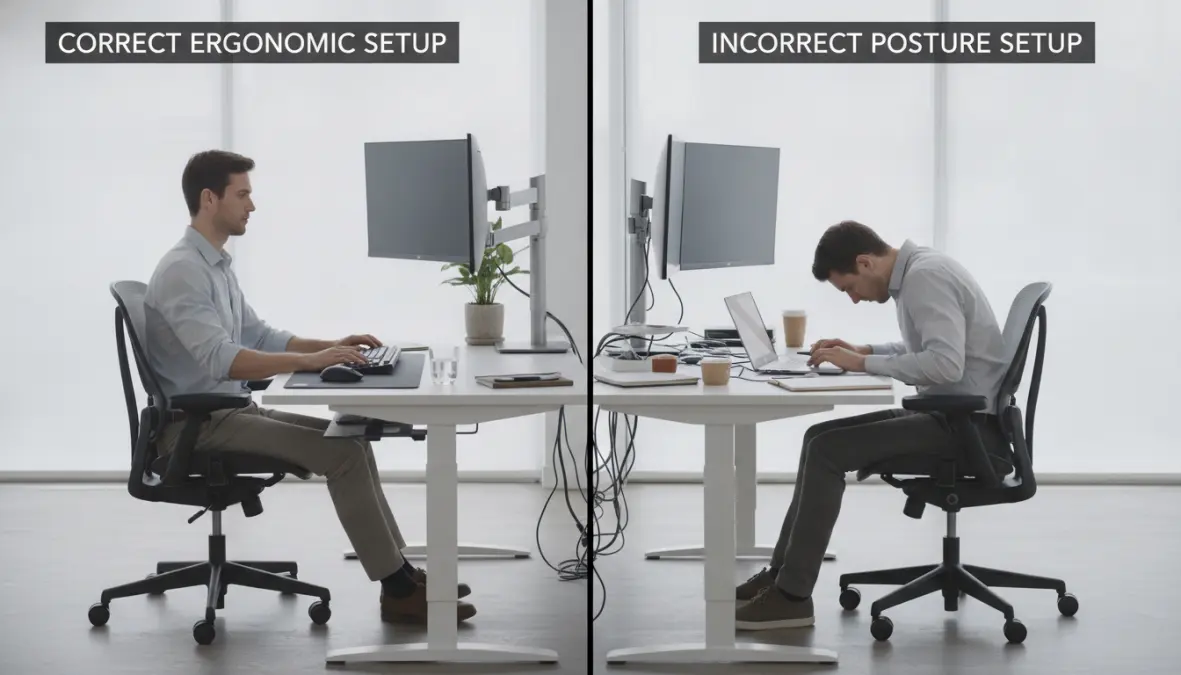
Start with your workspace. Creating an ergonomic workspace means positioning your monitor at eye level (the top of the screen should be at or slightly below eye height), keeping your keyboard and mouse close enough that your elbows rest at 90 degrees, and using a chair that supports your natural lumbar curve. Your feet should rest flat on the floor with knees at hip level. These adjustments alone can dramatically reduce strain on your spine and prevent the development of additional musculoskeletal disorders.
Movement is medicine. Follow the 20-20-20 rule: every 20 minutes, look at something 20 feet away for 20 seconds. Better yet, take micro-breaks every 30 minutes to stand, stretch, and reset your posture. Research shows that frequent movement breaks are more beneficial than a single long workout when it comes to combating sitting-related damage. Set phone reminders if necessary—your future spine will thank you.
Specific corrective exercises can target the exact patterns causing your postural issues. Chin tucks combat forward head posture by strengthening deep cervical flexors. Wall angels open up rounded shoulders and strengthen upper back muscles. Thoracic extensions over a foam roller can reverse the thoracic kyphosis that develops from constant slouching. Hip flexor stretches and core strengthening exercises address the lower body imbalances. Consistency matters more than intensity—10 minutes daily beats an hour once per week.
For smartphone use, the solution is simple in concept but requires discipline: bring the device to eye level rather than dropping your head down. Limit total screen time where possible, and be mindful of your positioning when you must use devices. Consider ways technology is ruining our posture as a call to use that same technology more intelligently—apps that remind you to correct your posture, standing desks with programmable height adjustments, or ergonomic accessories.
Don’t overlook the holistic factors. Your sleeping position and pillow choice affect spinal alignment for 6-8 hours nightly. Your footwear influences your entire kinetic chain. Regular physical activity that promotes spinal mobility and strength—swimming, yoga, Pilates, or resistance training—provides the foundation for better posture. These lifestyle considerations, similar to those explored in longevity research, can have profound long-term effects on your musculoskeletal health.
Know when to seek professional help. If you experience persistent pain, numbness, tingling, or severe restrictions in movement, consult a physical therapist, chiropractor, or orthopedic specialist. These professionals can assess structural issues, provide hands-on treatment for stubborn restrictions, and design personalized rehabilitation programs. Reversing damage from smartphone use posture may require professional guidance, especially if you’ve been living with poor posture for years.
The uncomfortable truth is that there’s no quick fix. Postural change requires daily awareness, consistent practice, and patience as your body gradually adapts to healthier positions. You didn’t develop these problems overnight, and you won’t reverse them overnight either. But every small adjustment—every time you correct your position, every micro-break you take, every strengthening exercise you perform—contributes to long-term spinal health. In our modern world of screens and seats, good posture isn’t something that just happens; it’s something you must actively cultivate. Your spine is the central pillar of your physical structure—treat it with the attention and care it deserves, because unlike our devices, we don’t get upgrades or replacements.