DNA Data Storage: How Genetic Code Is Revolutionizing Digital Information Storage
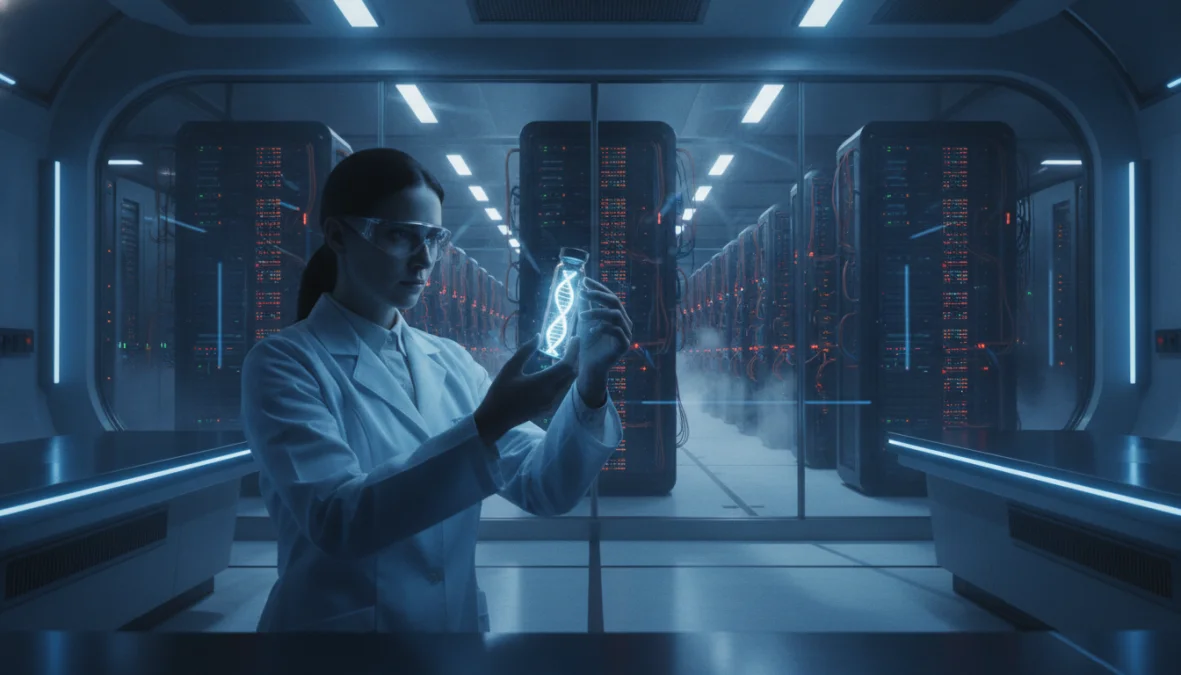
Imagine storing the entire internet—every website, video, photo, and document—in a container the size of a shoebox. Sounds like science fiction? Welcome to the world of DNA data storage, where the same genetic code that makes you unique could soon become the ultimate hard drive. As our digital universe explodes beyond traditional storage capacity, scientists are turning to nature’s original information system to solve one of technology’s biggest challenges.
What Is DNA Data Storage and How Does It Work?
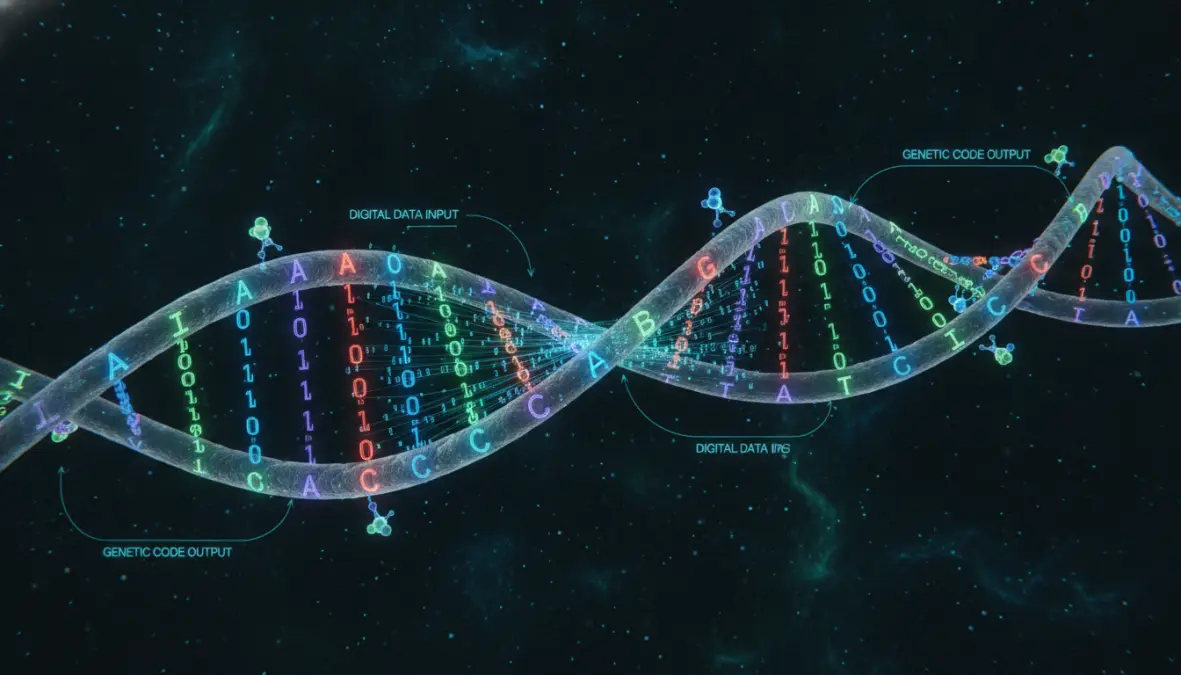
DNA data storage is a cutting-edge method that uses synthetic DNA molecules to encode and preserve digital information. Unlike traditional hard drives or SSDs that store data as magnetic patterns or electrical charges, DNA storage technology converts binary code (ones and zeros) into sequences of nucleotides—the building blocks of DNA represented by the letters A, T, G, and C.
Here’s how does DNA data storage work in practice: First, digital files are converted from binary code into quaternary code using the four DNA bases. For example, 00 might become A, 01 becomes T, 10 becomes G, and 11 becomes C. This DNA encoding process transforms your vacation photos or business documents into genetic sequences. Next, specialized machines synthesize these sequences into actual DNA strands—literally building molecules letter by letter. To retrieve your data, scientists use DNA sequencing technology (the same used in genomic research) to read the nucleotide sequences and convert them back into binary code.
The numbers are mind-boggling: a single gram of DNA can theoretically store about 215 petabytes (215 million gigabytes) of data. To put that in perspective, you could fit the entire digital content of Google, Facebook, and every major data center on Earth into a space smaller than a sugar cube. Compare this to traditional storage where a 16-terabyte hard drive weighs about a pound—genetic data storage offers a density advantage measured in millions.
Why DNA Digital Storage Could Transform Data Storage
Biological data storage isn’t just about cramming more data into less space—it offers several revolutionary advantages over conventional methods. First, there’s the incredible data density we just mentioned. Second, and perhaps more impressive, is longevity. While hard drives fail after 5-10 years and even archival-quality tape degrades within decades, DNA can remain stable for thousands of years under proper conditions. Scientists have successfully recovered and sequenced DNA from fossils tens of thousands of years old.
The advantages of DNA data storage extend to energy efficiency too. Unlike data centers that consume massive amounts of electricity for cooling and operation, DNA requires zero energy for storage once synthesized. It’s also remarkably resilient—resistant to electromagnetic pulses, radiation, and extreme temperatures that would destroy electronic storage. This makes molecular data storage ideal for archival storage solutions like historical records, cultural heritage preservation, and long-term scientific data.
Real-world projects are already underway. Microsoft partnered with Twist Bioscience to encode and retrieve 200 megabytes of data, including high-definition video, from synthetic DNA. Research institutions have stored everything from entire operating systems to classic films in DNA molecules. These experiments prove the concept works—we’re past the “if” and into the “when and how much.”
But let’s be honest about the challenges. The cost of DNA data storage remains prohibitively expensive—currently thousands of dollars per megabyte for synthesis and sequencing. Writing and reading speeds are glacially slow compared to electronic storage; what takes milliseconds on an SSD can take hours or days with DNA. Error rates during synthesis and sequencing also need improvement, though error-correction codes (similar to those used in traditional computing) help address this. For now, DNA information storage makes sense only for data that needs century-scale preservation and is rarely accessed—think national archives, not your Netflix queue.
The Future of Genetic Data Storage: Timeline and Applications
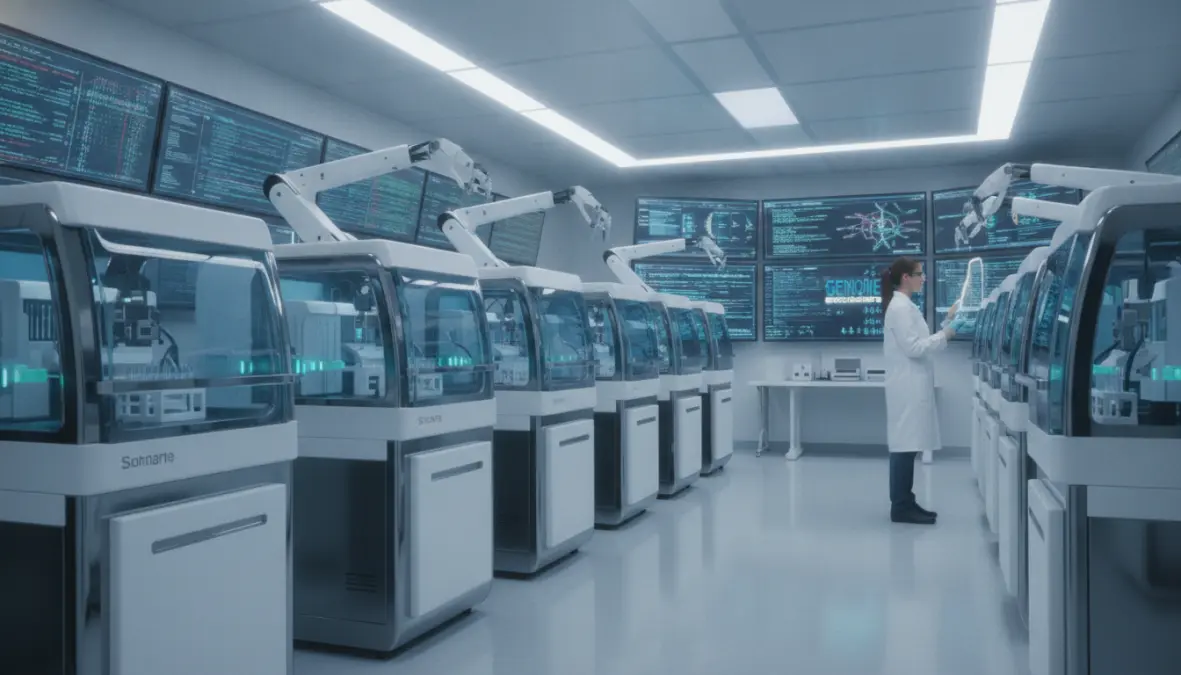
The trajectory of DNA storage technology mirrors the early days of electronic computing—expensive, slow, but improving exponentially. Researchers are aggressively working on reducing synthesis costs through automation and scaled production. New enzymatic synthesis methods promise to write DNA sequences faster and cheaper than current chemical approaches. Sequencing costs have already plummeted by orders of magnitude over the past decade, and this trend continues.
Looking ahead, the most promising applications for genetic data storage include preserving humanity’s collective knowledge—libraries, museums, and cultural institutions could archive irreplaceable materials with unprecedented security. National archives and government records requiring century-long retention are perfect candidates. There’s even serious discussion about using molecular data storage for space missions, where the density-to-weight ratio becomes critical and long-term storage without power is essential.
Imagine a “cold storage” tier for internet data—content that must be preserved but is accessed infrequently. While edge computing handles real-time data processing and traditional servers manage active files, DNA could become the ultimate backup layer. Similarly, as technologies like quantum networks evolve, we’ll need storage solutions that can preserve quantum-resistant encrypted data for millennia.
Before commercial adoption becomes realistic, several hurdles remain: synthesis and sequencing must become 100-1000 times faster and cheaper, error rates need to drop below current levels, and standardized protocols for encoding and retrieval must emerge. Industry experts suggest that niche commercial applications could appear within the next decade, with broader adoption following as costs decline. The technology won’t replace your smartphone’s storage, but it could revolutionize how civilization preserves its memory—much like how analog formats like vinyl found renewed relevance for specific use cases in our digital age.
FAQ: DNA Data Storage
How is data encoded in DNA for storage?
Digital data in binary format (1s and 0s) is converted into DNA’s quaternary system using nucleotides A, T, G, and C. Typically, pairs of binary digits map to single nucleotides—for example, 00=A, 01=T, 10=G, 11=C. This conversion process, called DNA encoding, transforms any digital file into a genetic sequence that can be synthesized into actual DNA molecules. Error-correction codes are added to ensure data integrity.
What is the DNA data storage capacity compared to traditional storage?
The DNA data storage capacity is extraordinary—approximately 215 petabytes per gram of DNA, which is millions of times denser than any electronic storage medium. A single coffee cup filled with DNA could theoretically store all the world’s current digital data. This extreme density comes from storing information at the molecular level, where individual nucleotide sequences represent data bits.
How long can data last when stored in DNA?
Under proper conditions (cool, dry, dark environments), DNA can remain stable and readable for thousands of years—potentially 10,000 years or more. This vastly exceeds traditional storage media: hard drives last 5-10 years, SSDs perhaps 10-20 years, and even archival tape degrades within decades. Ancient DNA recovered from fossils proves this longevity, making it ideal for archival storage solutions.
Is DNA data storage reversible or rewritable?
DNA synthesis for data storage creates permanent records—once synthesized, individual DNA strands cannot be “rewritten” like magnetic or electronic storage. However, reading data from DNA storage is non-destructive through sequencing. You can copy data repeatedly without degrading the original. For updates, you’d synthesize new DNA strands rather than modifying existing ones, making it best suited for write-once, read-many scenarios.
What does DNA storage cost currently?
Currently, the cost of DNA data storage remains extremely high—roughly $3,500 per megabyte for synthesis and hundreds of dollars per megabyte for sequencing. This makes it financially impractical for most applications. However, costs are declining rapidly as biomolecular computing and synthetic biology advance. Researchers predict costs could drop to commercially viable levels for specialized archival applications within the coming decade.
As we generate exponentially more data while grappling with the environmental costs of massive data centers, DNA digital storage offers a glimpse of a radically different future. It’s a reminder that sometimes the most advanced technology comes from looking backward—to the 3.5-billion-year-old information system that nature perfected long before we invented the first computer. The question isn’t whether DNA storage will play a role in our data future, but how soon we’ll make it practical enough to preserve our digital civilization for millennia to come.