Holographic Data Storage: The Future of 3D Information Recording Technology
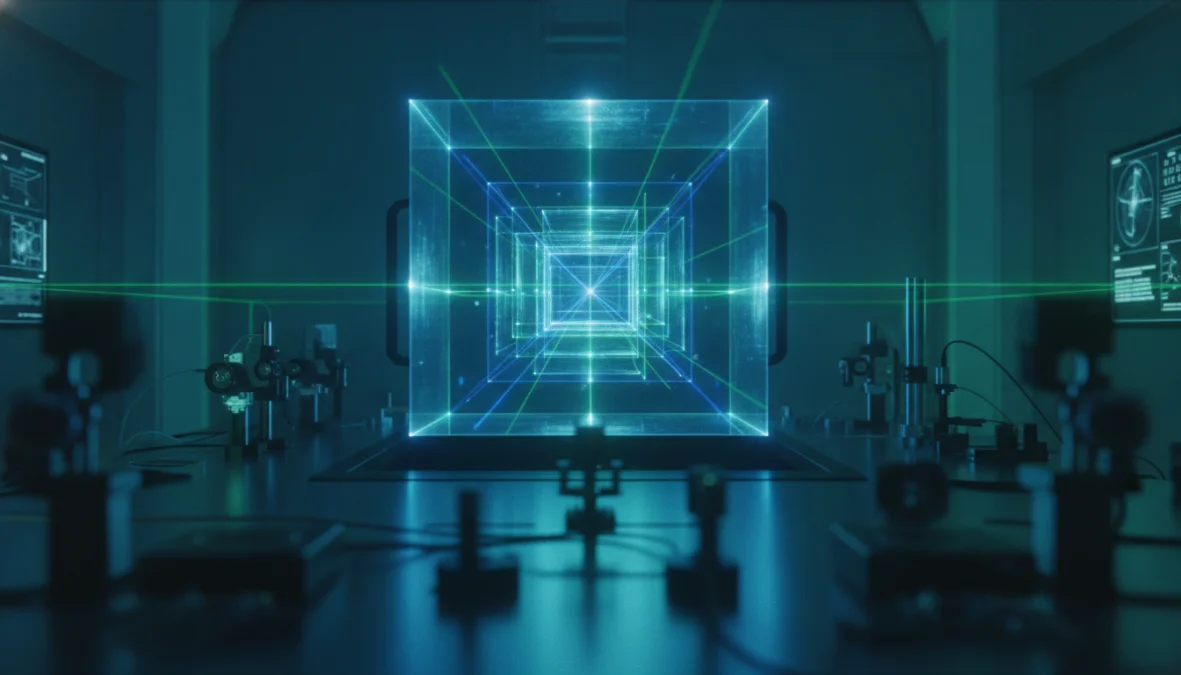
Imagine storing the entire Library of Congress in a crystal the size of a sugar cube. Sounds like science fiction, right? Well, holographic data storage is making this dream closer to reality than you might think. While traditional hard drives and even modern SSDs store data on flat, two-dimensional surfaces, holographic storage takes a radically different approach by recording information throughout the entire volume of a material. This 3D data storage method promises unprecedented capacity, lightning-fast access speeds, and durability that could revolutionize everything from cloud computing to long-term archival preservation.
What Is Holographic Data Storage and How Does It Work?
At its core, holographic data storage is a method of preserving information by recording interference patterns created by laser light within a photorefractive material. Unlike conventional storage devices that write data bit-by-bit on a surface, holographic memory systems store entire pages of data as three-dimensional patterns throughout the volume of the recording medium.
The technology dates back to the 1960s when researchers first demonstrated the theoretical possibility of using holography for data storage. However, practical implementation remained elusive for decades due to material limitations and the complexity of the required optical systems. The fundamental difference between holographic and traditional storage lies in dimensionality: conventional methods use a two-dimensional surface (like a disk platter or flash memory chip), while 3D data storage exploits the entire three-dimensional volume of the medium.
There are two main approaches to holographic recording: page-oriented storage and bit-wise recording. Page-oriented systems record entire two-dimensional pages of data simultaneously as a single hologram, making them significantly faster for both writing and reading. Bit-wise recording, though less common, stores individual bits as separate holograms and offers easier error correction but slower access times.
The Science Behind Volumetric Data Recording
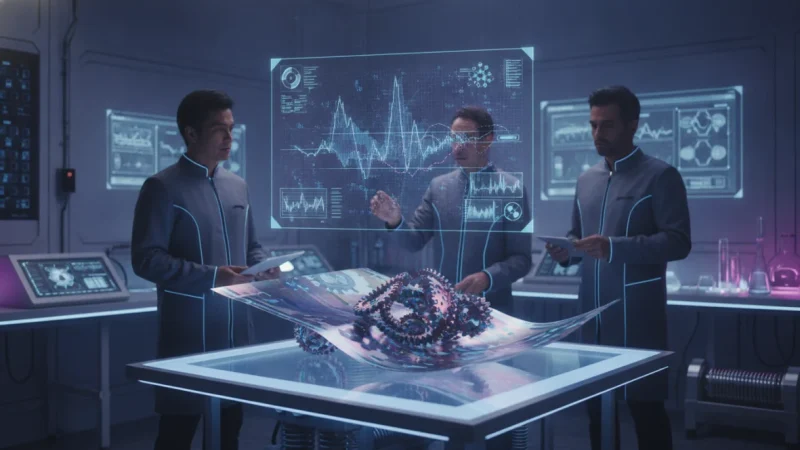
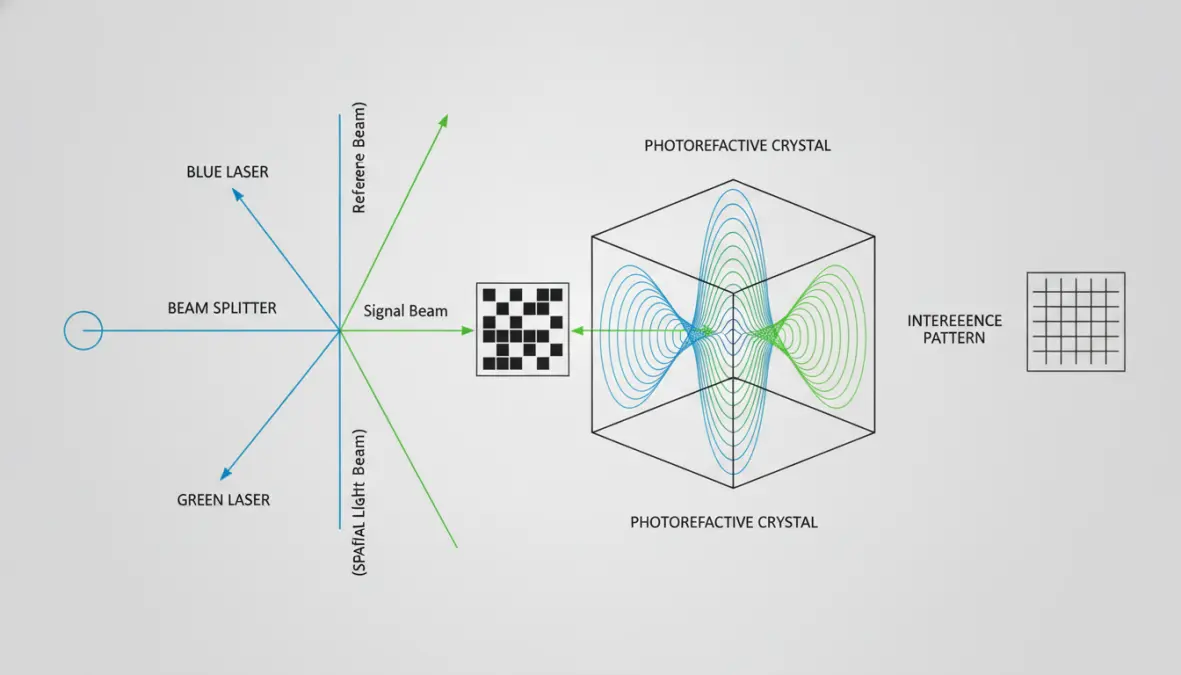
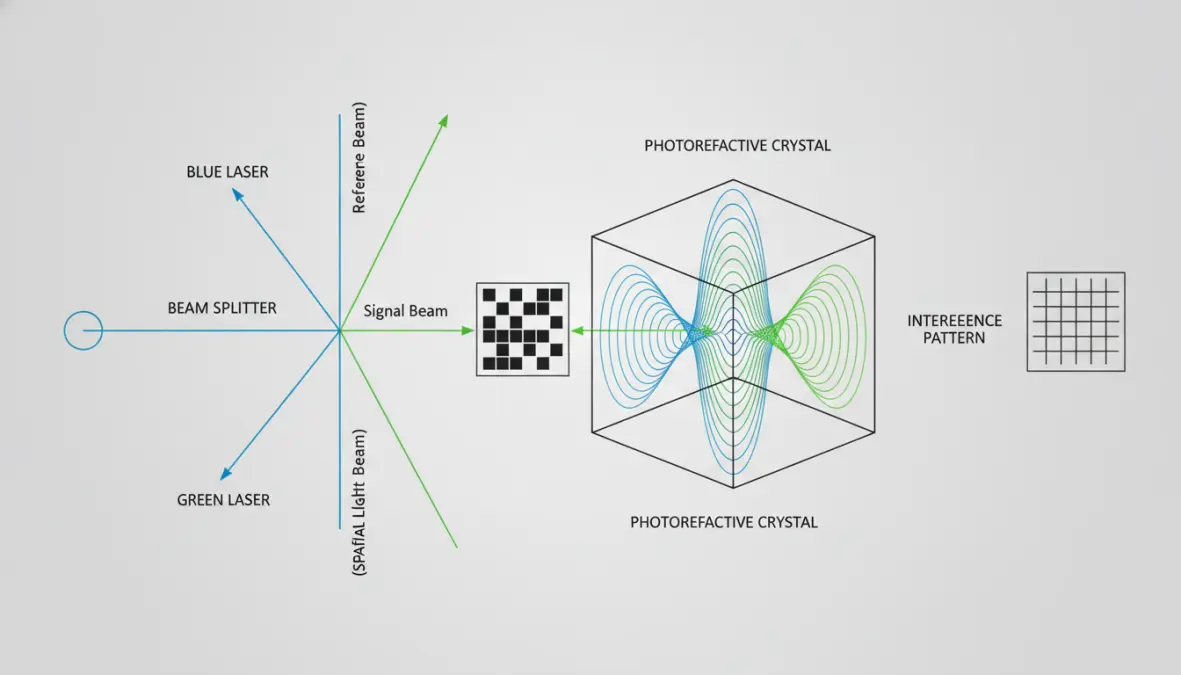
So how does holographic data storage work exactly? The process involves splitting a laser beam into two paths: a signal beam and a reference beam. The signal beam passes through a spatial light modulator (SLM) that encodes it with the data pattern—essentially a checkerboard of light and dark pixels representing ones and zeros. This encoded signal beam then intersects with the reference beam inside the photorefractive material.
When these two beams meet, they create an interference pattern—a complex three-dimensional distribution of light intensity. This pattern causes chemical or physical changes in the recording material, altering its refractive index modulation in a way that permanently captures the data. The beauty of volumetric data recording is that you can store multiple holograms in the same physical space by changing the angle or wavelength of the reference beam, a technique called multiplexing.
Reading data is equally elegant. When you shine the reference beam at the correct angle through the material, it diffracts according to the stored interference pattern, reconstructing the original data page which is then captured by a detector array. This parallel data access allows an entire page of information to be retrieved simultaneously, rather than reading bits sequentially like traditional hard drives.
The three-dimensional nature of this storage method is what enables such extraordinary data density. Instead of being limited to a two-dimensional surface, holographic systems can utilize the entire volume, potentially storing terabytes of information in a space smaller than a deck of cards.
Key Components of Holographic Memory Systems
A functional holographic memory system requires several sophisticated components working in harmony. At the heart is a high-quality laser source, typically a solid-state laser with excellent coherence properties necessary for creating stable interference patterns. Blue or green lasers are preferred because shorter wavelengths allow for higher storage densities.
The spatial light modulator (SLM) acts as the data encoder, typically using liquid crystal technology to create the pattern of ones and zeros that will be stored. These devices can modulate millions of pixels simultaneously, enabling the page-oriented approach that makes holographic storage so fast.
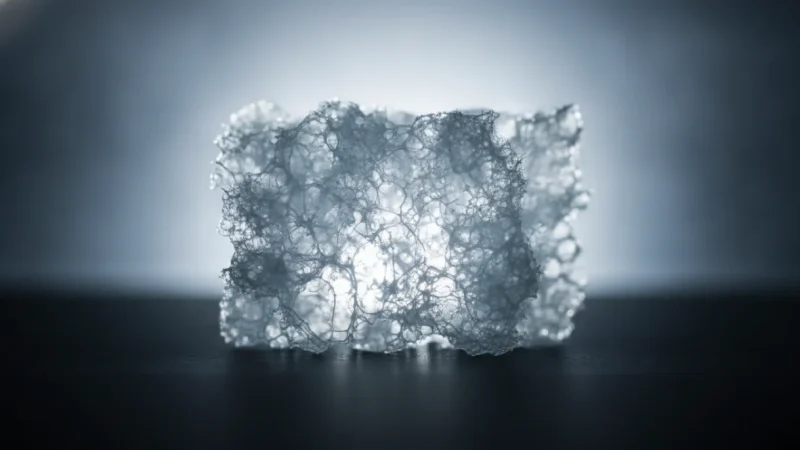
Photorefractive materials are the actual recording medium where data lives. Lithium niobate (LiNbO₃) crystals were among the first materials used and remain popular for research, offering excellent optical properties but with challenges in production costs. Modern systems increasingly use photopolymers—specially formulated plastic materials that change their structure when exposed to light. These polymers offer advantages in cost, manufacturability, and the ability to create thick recording media for maximum storage capacity.
Finally, detector arrays (typically CCD or CMOS sensors) capture the reconstructed data pages during readout, converting the optical information back into electronic signals that computers can process.
Advantages and Challenges of Holographic Storage Technology
The advantages of holographic data storage over traditional methods are compelling and numerous. First and foremost is the massive storage capacity. Because data is stored throughout a volume rather than on a surface, holographic storage technology can theoretically achieve densities of several terabits per cubic centimeter—orders of magnitude beyond what current magnetic or solid-state drives can offer.
Transfer speeds represent another major advantage. Thanks to parallel data access, holographic systems can read entire pages of data simultaneously. While a hard drive might read data at hundreds of megabytes per second, holographic systems have demonstrated transfer rates exceeding several gigabytes per second. This makes them particularly attractive for applications requiring rapid access to large datasets.
Longevity is another strength of optical data storage methods. Unlike magnetic media that can degrade over time or flash memory with limited write cycles, properly stored holographic media can preserve data for decades or even centuries without degradation. This makes them ideal archival storage solutions for institutions that need to preserve information long-term.
Interestingly, holographic storage also exhibits graceful degradation. Because data is distributed throughout the volume, minor scratches or defects don’t necessarily destroy information—the hologram can often be reconstructed even if portions of the material are damaged.
However, holographic data storage faces significant challenges that have prevented widespread commercial adoption. Production costs remain high, particularly for the photorefractive materials and precision optical components required. The systems are also mechanically and optically complex, requiring careful alignment and stability that increases both cost and maintenance requirements.
Environmental sensitivity poses another hurdle. Temperature fluctuations, vibrations, and humidity can all affect the optical properties of the storage medium and the precision needed for accurate readout. This makes holographic systems less robust than sealed hard drives or solid-state storage for everyday applications.
The lack of standardization has also slowed adoption. Without industry-wide standards for media formats and system compatibility, companies are hesitant to invest in technology that might become obsolete. Additionally, holographic storage faces stiff competition from rapidly improving alternatives. SSDs continue to increase in capacity while dropping in price, and cloud storage offers virtually unlimited scalability without requiring new hardware investment.
Current Applications and Future Prospects
Despite the challenges, holographic memory has found niche applications where its unique advantages justify the costs. Archives and libraries use holographic storage for long-term preservation of cultural heritage materials, taking advantage of the media’s longevity and high density. Medical imaging facilities leverage the technology to store massive amounts of high-resolution diagnostic images that must be retained for years.
Broadcasting organizations have adopted holographic storage for master archives of video content, where the combination of capacity and data integrity is crucial. Some specialized data centers use holographic systems for “cold storage”—infrequently accessed data that needs to be preserved reliably for compliance or historical purposes.
Looking forward, several promising sectors could drive broader adoption of holographic storage technology. The explosion of big data analytics and artificial intelligence creates demand for storing enormous training datasets. Similarly, edge computing applications might benefit from compact, high-capacity storage at distributed locations.
Scientific research generates unprecedented volumes of data—from genomic sequencing to particle physics—that requires long-term, reliable storage. Holographic solutions could also complement emerging technologies like quantum networks, providing the massive storage capacity needed for quantum computing applications.
Several companies and research institutions continue advancing commercial holographic storage solutions. While mainstream consumer adoption remains unlikely in the near term, the technology is gradually moving from laboratory curiosity to specialized commercial product. As materials science advances and production costs decrease, we may see holographic data storage carve out a significant role in the data storage ecosystem—not necessarily replacing SSDs or cloud storage, but complementing them for applications where density, longevity, and speed converge.
The future of data is undeniably three-dimensional, and holographic storage represents one of the most elegant solutions to our ever-growing appetite for information preservation. Whether it becomes the next revolution in storage technology or remains a specialized tool depends largely on continued innovation in materials, cost reduction, and finding the right applications where its advantages truly shine.