Postbiotics Explained: The Next Frontier in Gut Health Beyond Probiotics

You’ve probably heard all about probiotics—those friendly bacteria that are supposed to keep your gut happy. But here’s the thing: there’s a new player in town that’s getting researchers seriously excited. Postbiotics explained in simple terms? They’re the beneficial compounds that probiotics leave behind after they’ve done their job. Think of them as the valuable byproducts of bacterial fermentation, and they might just be the missing piece in your digestive wellness puzzle.
What Are Postbiotics? A Complete Definition
Let’s break down the postbiotics definition without getting too technical. When beneficial bacteria in your gut microbiome feast on fiber and other nutrients, they produce various compounds through fermentation. These metabolites—the actual substances left behind—are what we call postbiotics. Unlike probiotics (live microorganisms) or prebiotics (food for bacteria), postbiotics are non-living bacterial metabolites that still deliver impressive health benefits.
So what are postbiotics exactly? They include short-chain fatty acids (SCFAs) like butyrate, acetate, and propionate, bacterial cell wall fragments, enzymes, peptides, polysaccharides, and even vitamins produced during fermentation. These compounds are the end result of your gut bacteria’s metabolic processes—essentially, the beneficial substances they excrete or release.
The research journey is fascinating. Scientists initially focused on probiotics, discovering that live bacteria could improve intestinal health. Then came prebiotics, the fibers that feed these bacteria. Now, researchers have realized that many benefits attributed to probiotics actually come from their metabolic byproducts. This shift in understanding has positioned postbiotics as a promising frontier in microbiota research. For those interested in cutting-edge health optimization, this aligns well with the principles discussed in biohacking approaches to wellness.
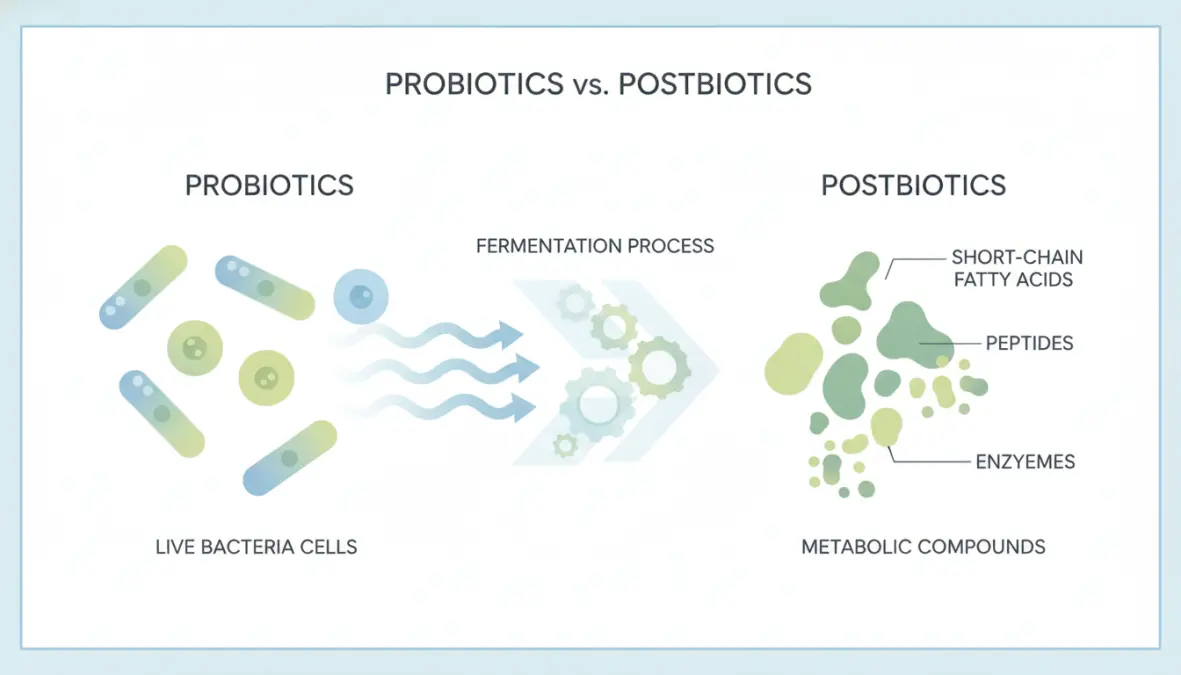
Postbiotics vs Probiotics: Understanding the Key Differences
The postbiotics vs probiotics debate isn’t about which is better—it’s about understanding when each makes sense. Here’s where things get interesting for practical use.
Stability and shelf-life: Probiotics are living organisms that require specific conditions to survive. They often need refrigeration and have limited shelf lives. Postbiotics, being non-living compounds, are remarkably stable. They don’t require refrigeration and maintain their potency much longer.
Survival through digestion: Here’s a dirty secret about probiotics—many don’t survive the harsh acidic environment of your stomach. Even if they do, they need to successfully colonize your gut. Postbiotics bypass this entire challenge. They’re ready to work immediately upon consumption, delivering benefits without needing to establish residence in your intestinal tract.
Safety profile: While probiotics are generally safe, they can pose risks for immunocompromised individuals or those with certain health conditions. Postbiotics eliminate this concern entirely since they contain no live bacteria.
The main types of postbiotics include:
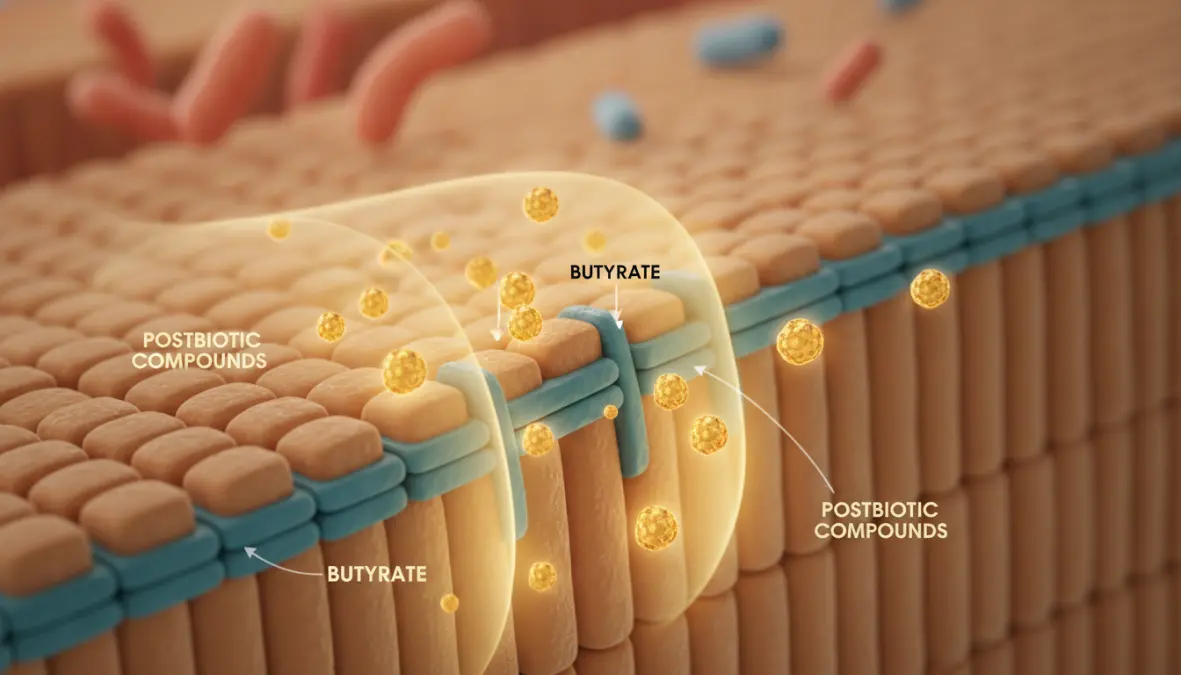
- Short-chain fatty acids (SCFAs): Butyrate strengthens the intestinal barrier, acetate supports immune function, and propionate helps regulate metabolism
- Cell wall fragments: Peptidoglycans and lipoteichoic acids that modulate immune responses
- Metabolic enzymes: Proteins that aid digestion and reduce inflammation
- Bacterial vitamins: B vitamins and vitamin K2 produced during fermentation
- Exopolysaccharides: Complex carbohydrates with prebiotic-like properties
Understanding the difference between prebiotics probiotics and postbiotics is crucial: prebiotics are food, probiotics are the workers, and postbiotics are the valuable products those workers create.
Science-Backed Benefits of Postbiotics for Gut Health and Beyond
Now for the exciting part—the postbiotics benefits that research is uncovering. These compounds pack a serious punch for digestive wellness and overall health.
Intestinal barrier protection: Butyrate, one of the most studied fermentation byproducts, serves as the primary fuel for cells lining your colon. It strengthens the gut barrier, reducing “leaky gut” and preventing unwanted substances from entering your bloodstream. This is fundamental to postbiotics gut health benefits.
Anti-inflammatory effects: Multiple postbiotic compounds demonstrate powerful anti-inflammatory properties. They help modulate immune responses, which is particularly valuable for conditions involving chronic inflammation.
Immune system support: Bacterial cell wall fragments and certain metabolites train your immune system to respond appropriately to threats while maintaining tolerance to beneficial microbes. This immune education happens without the risks associated with live bacteria.
Beyond the gut: The postbiotics benefits for digestive health are just the beginning. Research suggests these compounds influence mental health through the gut-brain axis, support skin health, and may improve metabolic markers like blood sugar regulation.
Food sources vs supplements: You can get postbiotics naturally from fermented foods like kimchi, kefir, yogurt, miso, sauerkraut, and kombucha. These foods contain both the bacteria and their metabolic products. Postbiotics supplements, on the other hand, provide concentrated amounts of specific compounds.
When choosing best postbiotics for gut health supplements, look for products that specify which postbiotic compounds they contain—butyrate, specific peptides, or exopolysaccharides. Quality matters more than quantity here. Most supplements are considered safe for daily use, though consulting with a healthcare provider is always wise.
An emerging strategy combines prebiotics, probiotics, and postbiotics together—called “synbiotics”—to create a comprehensive approach to microbiome health. This mirrors holistic approaches seen in other fields, like regenerative agriculture’s comprehensive ecosystem thinking.
FAQ: Common Questions About Postbiotics
Are postbiotics better than probiotics?
Not necessarily “better,” but different. Postbiotics offer immediate benefits without requiring gut colonization, making them more stable and suitable for people who can’t take probiotics. Both have unique advantages.
Can I take postbiotics daily?
Yes, postbiotics are generally safe for daily consumption through food or supplements. They’re stable compounds that don’t carry the risks associated with introducing live bacteria.
Do postbiotics have side effects?
Side effects are rare and typically mild—occasionally digestive changes as your system adjusts. They’re considered safer than probiotics for immunocompromised individuals.
What foods contain postbiotics?
Any properly fermented food contains postbiotics: kefir, yogurt, kimchi, sauerkraut, miso, tempeh, kombucha, and aged cheeses. The longer the fermentation, typically the more postbiotic compounds present.
How long before seeing results?
Because postbiotics work immediately without needing colonization time, some people notice effects within days to weeks, though this varies individually.
Who should avoid postbiotics?
Very few people need to avoid postbiotics entirely. Those with histamine intolerance might need to be cautious with certain fermented foods, but isolated postbiotic supplements are typically well-tolerated.
The shift from focusing solely on probiotics to understanding what are postbiotics and how do they work represents a maturation in gut health science. Rather than asking are postbiotics better than probiotics, the smarter question might be: how can we leverage both to optimize our microbiome? By understanding these bacterial metabolites and their impressive benefits, you’re equipped to make informed decisions about your digestive wellness. Whether through fermented foods or targeted supplements, postbiotics offer a stable, effective way to support your gut and overall health—no refrigeration required.