The Attention Span Myth: What Science Really Says About Focus Duration

You’ve probably heard it before: humans now have an attention span shorter than a goldfish—just eight seconds. It’s a claim that’s been repeated in boardrooms, classrooms, and across social media so many times that it’s become accepted as fact. But here’s the thing: attention span research tells a completely different story. The goldfish comparison? Total nonsense. The eight-second limit? A misinterpretation that spiraled out of control. Let’s dig into what science actually says about how long humans can focus, and why the truth is far more interesting than the myth.
The Origins of the Attention Span Myth
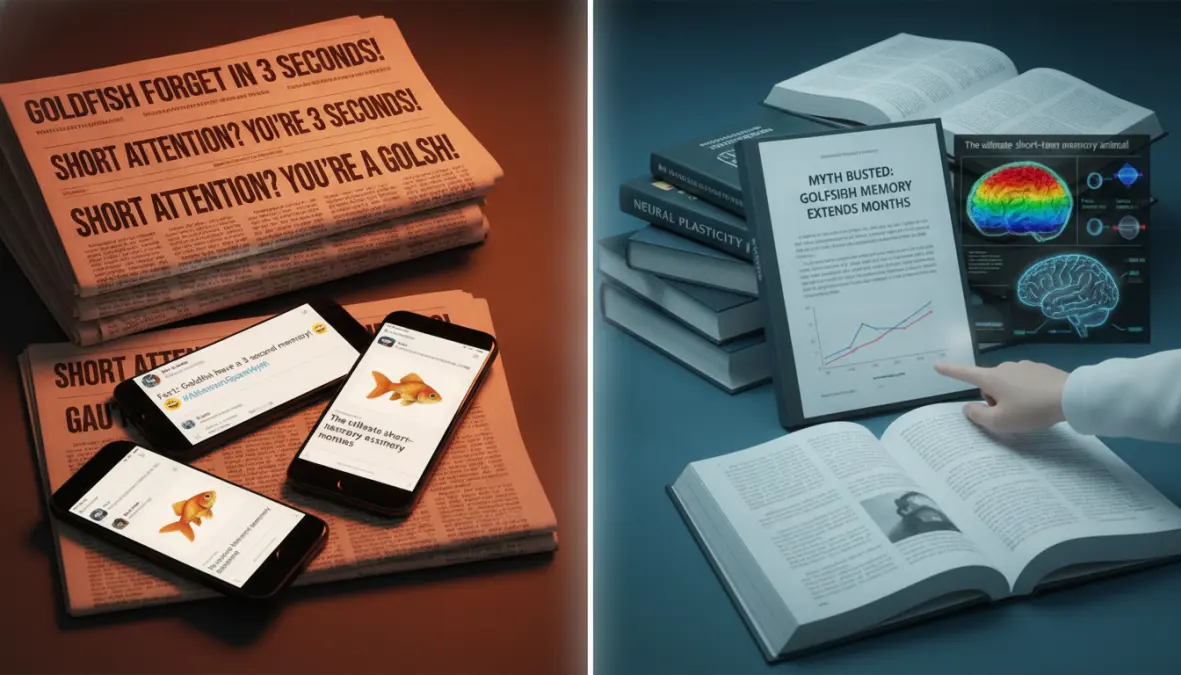
The infamous eight-second attention span myth debunked traces back to a 2015 Microsoft Canada report that analyzed digital behavior. The study suggested that the average human attention span had dropped from 12 seconds to 8 seconds since the year 2000—one second less than a goldfish. Media outlets ran wild with this narrative, crafting headlines that proclaimed our brains were broken by technology.
But there’s a massive problem: the original research never actually measured sustained attention or cognitive focus. The attention span statistics cited were about how long people engaged with digital content before clicking away—a metric of interest, not neurological capacity. The goldfish comparison came from an unrelated study about fish memory, making the entire analogy scientifically meaningless.
Journalist Simon Maybin investigated the claim for the BBC and found no credible scientific source. The myth spread because it confirmed our anxieties about technology and felt intuitively true. But feeling true doesn’t make it scientifically accurate. This is a textbook case of how misinformation amplifies when it aligns with cultural narratives, especially in what’s been called the attention economy.
What Attention Span Research Actually Reveals
Real cognitive attention research paints a far more nuanced picture. Neuroscientists distinguish between multiple types of attention, each serving different functions. Sustained attention research examines how long we can maintain focus on a single task, while selective attention involves filtering relevant information from distractions, and divided attention deals with multitasking.
Focus duration studies demonstrate that humans can maintain sustained attention for significantly longer than eight seconds—the actual duration depends entirely on the task and context. Research from the University of California, Irvine found that people can focus on a single computer task for about 40 minutes before attention naturally wanders. Other concentration span science shows that deep focus states can last anywhere from 10 to 90 minutes depending on cognitive load and engagement.
A study published in Nature Human Behaviour found that sustained focus on complex cognitive tasks typically lasts 20-45 minutes before performance begins to decline. This isn’t attention “failing”—it’s the brain managing cognitive load and working memory capacity. Your brain cycles through periods of intense focus and natural rest, similar to how sleep cycles work.
What neuroscience says about attention span is that it’s not a fixed number. The prefrontal cortex, responsible for executive function, coordinates attention based on goals, motivation, and environmental demands. Neuroplasticity means our attentional systems adapt constantly. Research on mindfulness attention practices shows we can actually train and strengthen our focus—hardly consistent with the idea that our brains are deteriorating.
The real issue isn’t shortened attention—it’s increased task switching. A Microsoft study (different from the misquoted one) found that people switch between apps and websites frequently, creating the illusion of inability to focus. But this is behavioral adaptation to information-rich environments, not cognitive decline. When we’re genuinely interested, our distraction resistance is remarkably strong.
Context Matters: Why Focus Duration Varies
So, how long can humans actually focus? The answer is: it depends. Focus duration studies consistently show that attention varies dramatically based on context. You might struggle through a 10-minute boring meeting but binge-watch an entire season of a show—that’s six hours of sustained attention.
The human attention span responds to several factors: task complexity, personal interest, environmental distractions, and intrinsic motivation. A fascinating topic in an ideal environment can command focus for hours. Research findings show that gamers regularly maintain intense concentration for 2-3 hour sessions, while readers can lose themselves in books for similar durations. The difference isn’t attention capacity—it’s engagement.
Scientists have found that attention span research findings consistently point to motivation as the primary variable. When tasks align with our goals or trigger curiosity, our brains naturally sustain attention. When they don’t, we seek more rewarding stimuli. This is adaptive behavior, not dysfunction.

What This Means for the Digital Age
Understanding what research say about attention span has profound implications for how we design education, workplaces, and digital content. The takeaway isn’t that attention is collapsing—it’s that we’re adapting to an environment with unprecedented information density. Cognitive attention research suggests we’re developing new skills in rapid information processing and filtering.
Linda Stone coined the term “continuous partial attention” to describe how we maintain awareness of multiple information streams simultaneously. This isn’t the same as shallow thinking—it’s a different cognitive mode suited to digital environments. The key is knowing when to employ sustained deep focus versus scanning mode, similar to how biohacking approaches optimize different cognitive states.
For educators and content creators, attention span research suggests designing for engagement rather than assuming limitation. Break complex material into meaningful chunks, not because people can’t focus, but because it aligns with how working memory capacity processes information. Create compelling hooks, but don’t insult your audience by assuming they can’t handle depth.
The science also validates strategies like the Pomodoro Technique (25-minute focus blocks) not because we can’t focus longer, but because scheduled breaks optimize cognitive performance and prevent mental fatigue. This is about working with your brain’s natural rhythms, not compensating for deficiency.
Perhaps most importantly, debunking the goldfish attention span myth empowers us to reject defeatist narratives about technology and cognition. Yes, digital environments present challenges, but attention span research shows human cognitive abilities remain robust and adaptable. We’re not broken—we’re evolving. And understanding the real science behind focus gives us the tools to optimize our attention in whatever context we choose.
So next time someone mentions that eight-second statistic, you’ll know the truth: your attention span is just fine. What matters is how you choose to direct it.