The Dopamine Detox Trend: Does It Actually Reset Your Brain’s Reward System?

Scrolling through social media, binge-watching Netflix, ordering fast food at 2 AM—modern life is basically a non-stop dopamine buffet. And now, there’s a growing movement claiming we need to hit the brakes: the dopamine detox. Influencers swear by it, productivity gurus preach it, and your friend who deleted Instagram won’t shut up about it. But does temporarily cutting out pleasurable activities actually reset your brain’s reward system, or is this just another wellness trend built on shaky science?
What Is Dopamine Detox and Why Is Everyone Talking About It?
The dopamine detox—sometimes called dopamine fasting—is a practice that emerged from Silicon Valley, where tech workers sought ways to combat constant digital stimulation. The basic idea? Temporarily eliminate highly stimulating activities that trigger dopamine release, giving your brain a break from dopamine overload.
In practice, this means cutting out activities like scrolling social media, playing video games, watching streaming services, eating junk food, listening to music, or even having unnecessary conversations. Some versions are extreme (24-48 hours of near-total sensory deprivation), while others are more moderate, focusing primarily on a digital detox.
The trend exploded thanks to Dr. Cameron Sepah, a California-based psychologist who popularized dopamine fasting as a form of stimulus control—a cognitive behavioral therapy technique. His version focuses on taking breaks from compulsive behaviors rather than all pleasurable activities. But as with many wellness trends, the internet ran with it, creating increasingly extreme interpretations.
Why did it go viral? Because it promises something incredibly appealing: a quick fix for our behavioral addiction to instant gratification. In a world where we can get anything—entertainment, food, validation—within seconds, the idea of “resetting” our overstimulated brains sounds pretty damn good. If you’ve ever felt the urge to check your phone 50 times in an hour or struggled to focus on anything for more than five minutes, you understand the appeal.
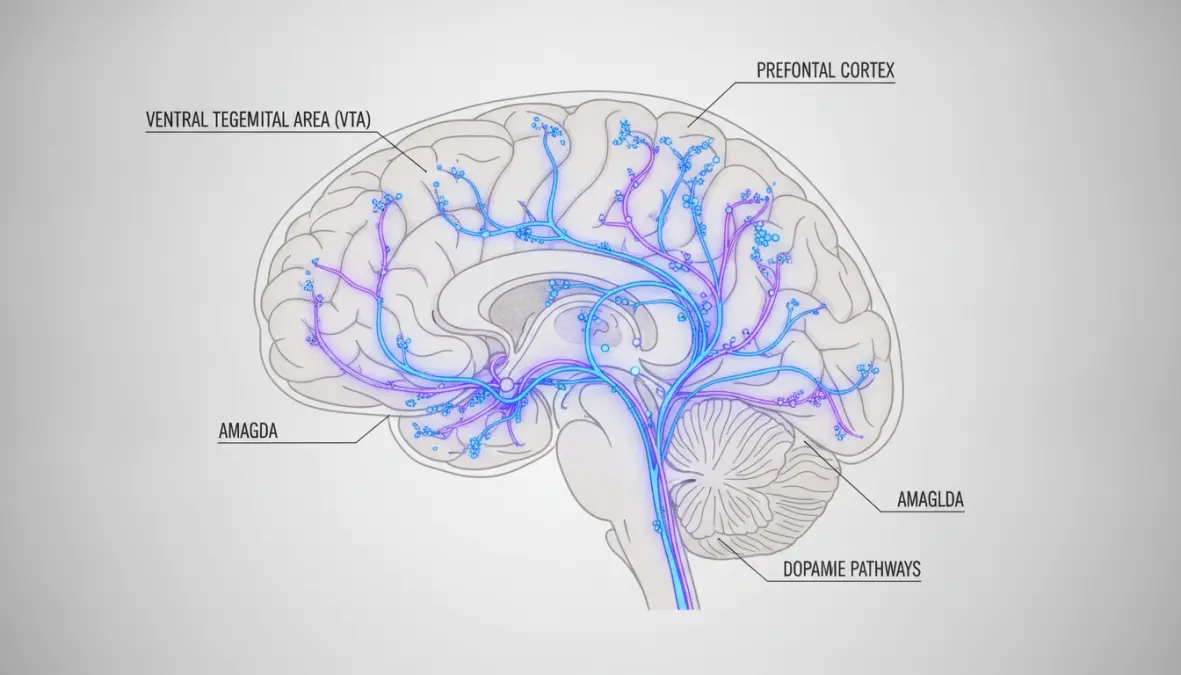
The Neuroscience Behind Dopamine: What Really Happens in Your Brain
Here’s where things get scientifically interesting—and where the dopamine detox narrative starts to fall apart. Dopamine isn’t actually the “pleasure chemical” most people think it is. According to neuroscience dopamine research, it’s primarily a neurotransmitter involved in motivation, anticipation, and reward-seeking behavior, not pleasure itself.
Your brain’s reward system works like this: when you anticipate something rewarding, dopamine levels spike. This motivates you to pursue that reward. When you get it, other chemicals (like endorphins and serotonin) create the actual feeling of pleasure. Dopamine is the “I want it” signal, not the “I like it” signal.
The concern about modern life isn’t that we’re getting too much dopamine—it’s that we’re getting constant, unpredictable spikes that can lead to desensitization. When your brain is bombarded with high-dopamine activities (hello, TikTok’s infinite scroll), it may downregulate dopamine receptors over time. This means you need increasingly intense stimulation to feel the same level of motivation or satisfaction.
But here’s the kicker: you can’t actually “detox” from dopamine. It’s not a toxin your body eliminates—it’s a crucial neurotransmitter your brain produces constantly. The real question isn’t whether you can flush it out (you can’t), but whether reducing overstimulation can help restore receptor sensitivity through neuroplasticity.
Common misconceptions about dopamine:
- Dopamine is the pleasure chemical (it’s actually about wanting/seeking)
- You can “reset” dopamine to factory settings (receptor changes take weeks/months, not days)
- All dopamine is bad (you literally need it to function and feel motivated)
- Dopamine detox is a recognized medical treatment (it’s not)
Can You Actually ‘Reset’ Your Dopamine Receptors?
The term “brain reset” is catchy but misleading. Research on neuroplasticity shows that your brain can adapt and change receptor sensitivity, but this isn’t an overnight process. Studies on addiction recovery—where genuine dopamine dysregulation occurs—show that meaningful changes to the reward system typically take weeks to months of consistent behavioral change, not a weekend of deprivation. That said, taking a break from overstimulating activities can help break compulsive patterns and reduce tolerance to constant stimulation. It’s less about “resetting” and more about giving your reward system a chance to recalibrate gradually.

Dopamine Detox Benefits: What Actually Works (And What Doesn’t)
Let’s separate the hype from reality. Does dopamine detox actually work? The answer is: sort of, but not for the reasons most people think.
Potential benefits that have some merit:
- Improved focus and attention: Taking a break from constant digital notifications can genuinely help your concentration, similar to the benefits of digital detox retreats
- Reduced compulsive behavior: Temporarily abstaining from addictive apps or activities can help you recognize unhealthy patterns
- Greater appreciation for simple pleasures: When you’re not constantly chasing the next hit, a walk outside or a good conversation can feel more satisfying
- Better self-regulation: Practicing delayed gratification and mindfulness practice has documented psychological benefits
What dopamine detox does NOT do:
- It doesn’t literally “detoxify” your brain or reset dopamine levels
- It’s not a treatment for clinical addiction or mental health disorders
- It won’t magically cure procrastination, depression, or ADHD
- Extreme versions (avoiding all pleasurable activities) can actually be counterproductive and miserable
The real value isn’t in the neuroscience claims—it’s in the behavioral intervention. Reducing screen time reduction and taking breaks from instant gratification can help you develop healthier habits. But you could achieve the same benefits through evidence-based approaches like cognitive behavioral therapy, breaking doomscrolling habits, or science-backed biohacking techniques.
A more balanced approach? Instead of extreme deprivation, try strategic moderation: set specific times for social media, create phone-free zones, replace passive scrolling with active hobbies, and prioritize quality sleep (which actually does impact your reward system—check out how your chronotype affects brain function).
FAQ: Common Questions About Dopamine Detox
How long should a dopamine detox last?
There’s no scientifically established duration, but most advocates recommend anywhere from 24 hours to 30 days. Research suggests that dopamine detox rules and guidelines should focus on consistency rather than duration—regular breaks from overstimulation (like weekly screen-free evenings) may be more sustainable and effective than extreme one-off detoxes.
Is dopamine fasting scientifically proven?
Not exactly. While the underlying concept—that reducing overstimulation can help break compulsive habits—has support in behavioral psychology, the specific practice of “dopamine fasting” lacks rigorous clinical trials. The neuroscience claims are often oversimplified or misrepresented.
What should I do during a dopamine detox?
If you’re wondering how to do a dopamine detox properly, focus on low-stimulation activities: walking, journaling, meditation, reading physical books, or simply sitting with boredom. The goal is to practice tolerating understimulation, not to make yourself miserable. What happens during a dopamine detox varies by person, but many report initial restlessness followed by increased mental clarity.
Can dopamine detox help with phone addiction?
Potentially, yes. Taking structured breaks from your device can help reduce compulsive checking behaviors. However, addressing the root causes—like anxiety, FOMO, or poor boundaries—through therapy or mindfulness practice often works better than temporary abstinence alone. The dopamine detox vs digital detox difference? Digital detox specifically targets technology, while dopamine detox theoretically includes all high-stimulation activities.
So, does dopamine detox actually reset your brain? Not in the literal, neurochemical sense that influencers claim. But as a behavioral tool for recognizing and reducing our dependence on constant stimulation? It might just have some value—as long as you skip the pseudoscience and focus on sustainable habit changes instead.