The Library Economy: How Tool Libraries Are Redefining Ownership and Community Sharing
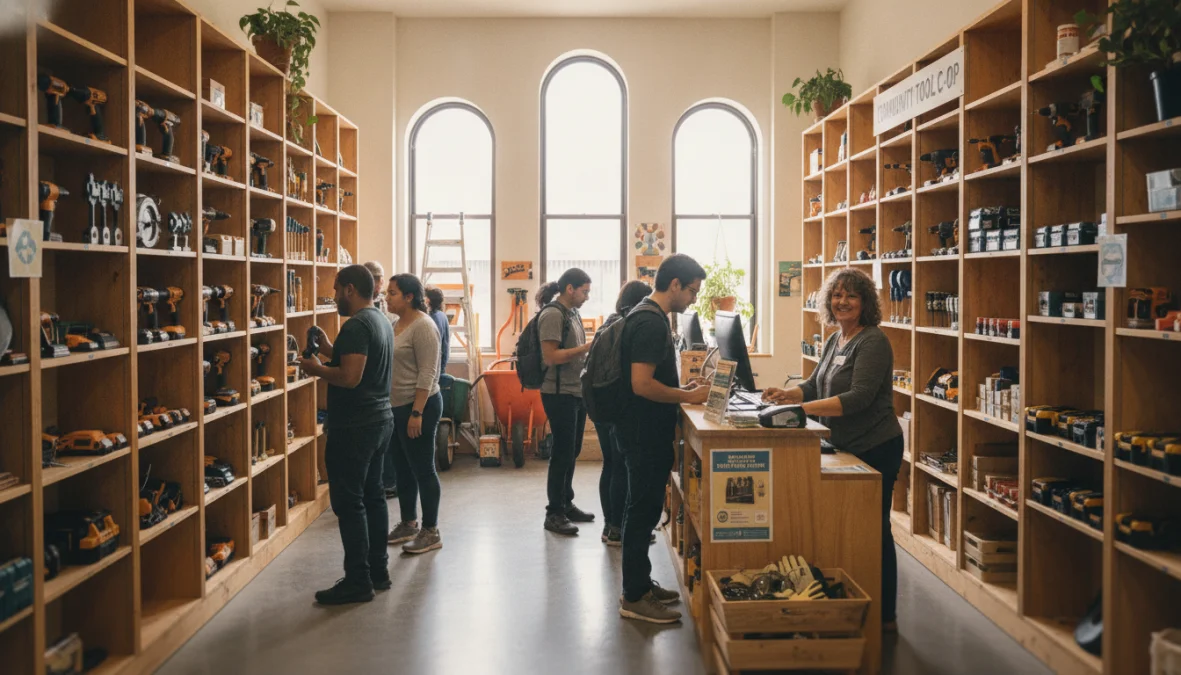
Ever bought a power drill for a single weekend project, only to have it collect dust in your garage for years? You’re not alone. The average household power drill is used for just 13 minutes over its entire lifetime. That’s where the tool library movement comes in—a brilliant intersection of community empowerment, environmental sustainability, and common sense that’s quietly revolutionizing how we think about ownership.
These grassroots institutions are popping up in cities worldwide, offering everything from circular saws to pasta makers, challenging our consumer culture one borrowed ladder at a time. They’re part of the broader sharing economy, but with a distinctly community-focused twist that traditional rental shops can’t match.
What Is a Tool Library and How Does It Work?
A tool library operates much like your local book library, except instead of checking out novels, you’re borrowing hedge trimmers and tile cutters. Also known as a tool lending library or community tool shed, these spaces provide members with access to hundreds or even thousands of tools for a fraction of the cost of ownership.
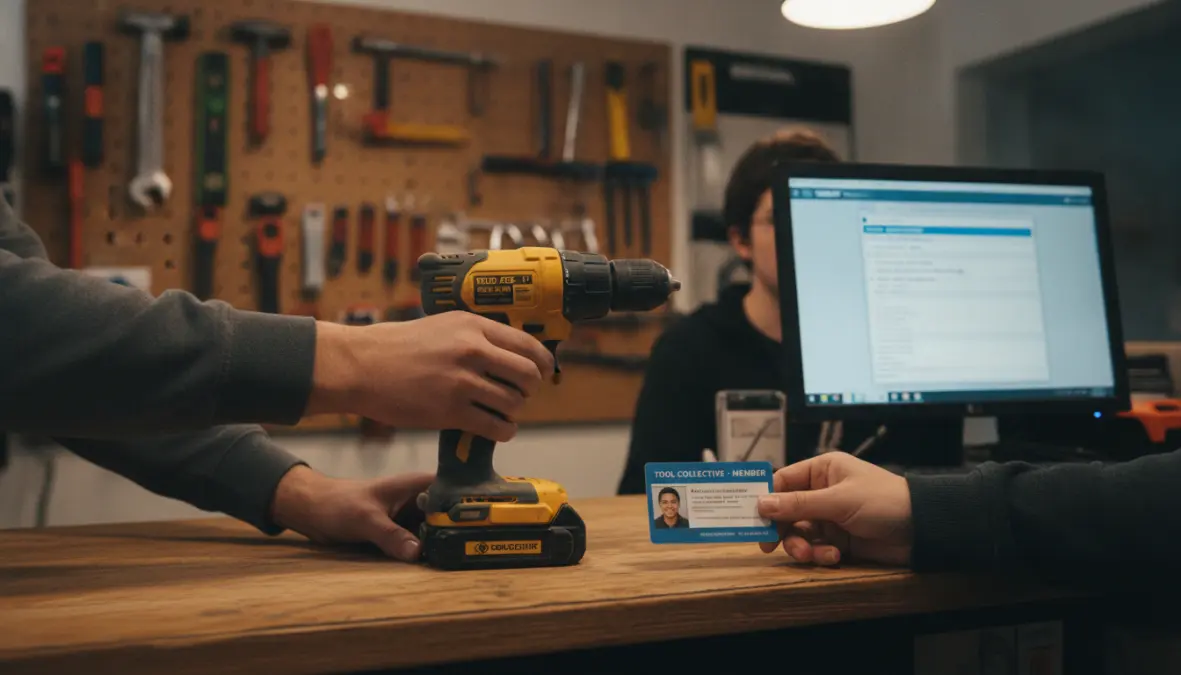
The typical model is straightforward: members pay an annual or monthly fee (often between $20-60 yearly), browse the inventory either online or in-person, and check out tools for a specified loan period—usually anywhere from 2-7 days. The Berkeley Tool Library in California, one of the oldest in North America, boasts over 4,500 tools ranging from basic hand tools to specialized equipment like cement mixers and carpet cleaners. Similarly, the Toronto Tool Library has expanded to multiple branches across the city, serving thousands of members annually.
What distinguishes a tool lending library from a broader library of things is the focus. While libraries of things might include kitchen gadgets, camping gear, or musical instruments, tool libraries specifically concentrate on construction, repair, and DIY equipment. This specialization allows them to develop expertise in tool maintenance, provide safety training, and create communities of practice around hands-on skills.
The movement has seen remarkable growth. The number of tool libraries in North America has increased from fewer than a dozen a decade ago to over 50 documented locations today, with many more informal tool-sharing initiatives emerging. The inventory typically includes power tools, hand tools, gardening equipment, automotive tools, painting supplies, and increasingly, specialized items like thermal imaging cameras and professional-grade woodworking equipment.
The Environmental and Economic Case for Equipment Sharing
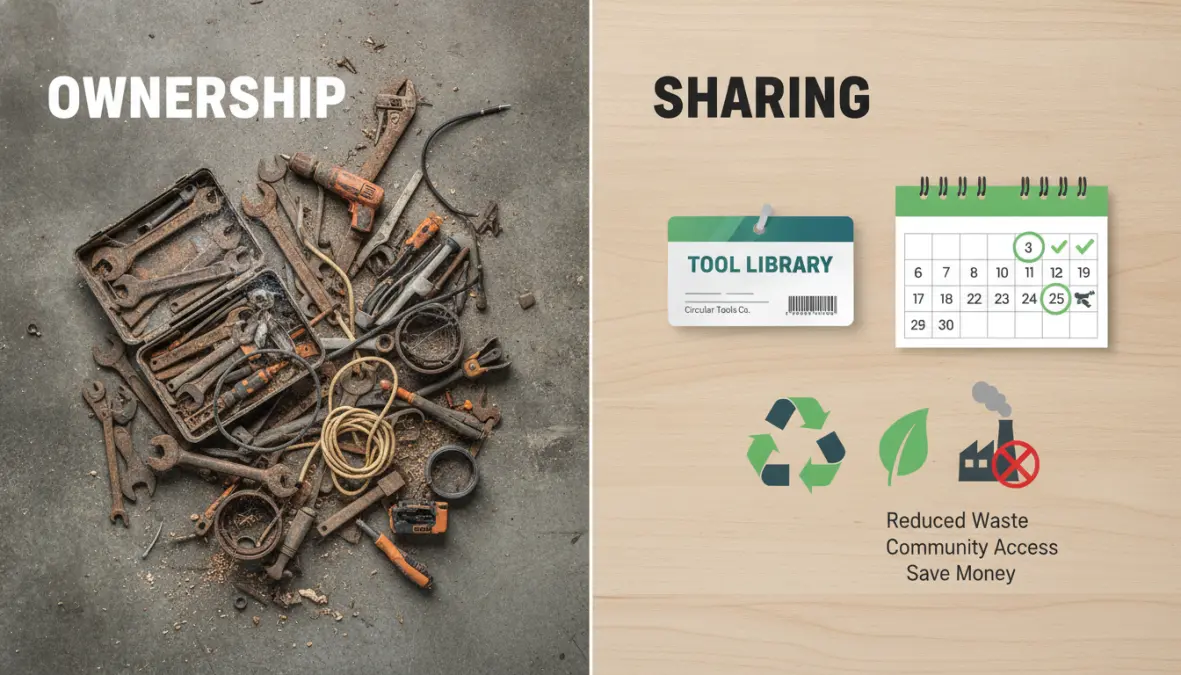
The environmental argument for equipment sharing is compelling. Manufacturing tools requires significant resources—steel, plastics, energy—and most tools spend 99% of their existence unused. By sharing resources through collaborative consumption, communities can dramatically reduce manufacturing demand, waste, and carbon emissions. A single industrial-grade pressure washer shared among 100 households replaces potentially 100 individually-owned units, each requiring raw materials, energy to produce, and eventually ending up in landfills.
Research on resource sharing models suggests that tool libraries can reduce tool-related consumption by up to 80% in participating households. This aligns perfectly with circular economy principles, where products are kept in use longer, repaired rather than discarded, and shared rather than individually owned—similar to how adaptive reuse architecture transforms existing structures rather than building new ones.
Economically, the math is even simpler. The average homeowner might spend $500-2,000 on tools they’ll rarely use, while a tool library membership costs a fraction of that. One study found that members save an average of $1,200 annually by borrowing instead of buying. For lower-income communities, this accessibility transforms lives—suddenly home repairs, garden improvements, and creative projects become financially feasible.
Beyond individual savings, there’s significant community economic impact. Tool libraries create local employment, keep money circulating within communities rather than flowing to big-box retailers, and enable residents to tackle projects they might otherwise hire out. This community empowerment through access rather than ownership extends opportunities far beyond what traditional markets provide, much like how vertical farming democratizes food production in urban settings.
Challenging the Ownership Culture: A Cultural Shift
Perhaps the most profound impact of tool libraries isn’t environmental or economic—it’s cultural. These institutions directly challenge the ownership culture that’s dominated Western consumer society for generations. The idea that we must personally own everything we might occasionally need has been baked into our economic system, driving endless consumption cycles and status-seeking through possessions.
Tool libraries promote access over ownership, demonstrating that having the use of something when you need it is often more valuable than permanent possession. This shift from ownership to access-based consumption mirrors broader trends in the collaborative economy—think Netflix instead of DVD collections, or car-sharing instead of personal vehicles. Much like polywork culture is reshaping professional identity, tool libraries are reshaping our relationship with material goods.
Younger generations particularly embrace this model, having grown up with streaming services and subscription models. They’re less attached to ownership as identity and more focused on sustainable living practices. However, cultural obstacles remain—particularly the pride and self-sufficiency associated with having one’s own fully-stocked workshop, and concerns about availability when you need something immediately.
Starting and Sustaining a Community Tool Library
Launching a community tool shed requires more than good intentions—it demands careful planning, community buy-in, and sustainable operations. The first step is community assessment: surveying potential members about needs, gauging interest levels, and identifying existing resources. Many successful tool libraries started with community meetings that built both excitement and volunteer commitment.
Funding presents the initial hurdle. Start-up costs typically range from $10,000-50,000, covering initial inventory, shelving, checkout systems, and space improvements. Successful funding sources include municipal grants, crowdfunding campaigns, foundation support, and partnerships with existing organizations. The West Seattle Tool Library, for instance, partnered with a local community center, reducing overhead costs significantly.
Space requirements vary—some tool libraries operate from small storefronts (500-1,000 square feet), while others occupy warehouses. Location matters: accessibility by public transit, parking availability, and proximity to the communities served all affect success. Initial inventory often comes from donations, bulk purchases of refurbished tools, and strategic acquisitions based on member surveys.
Governance models include nonprofit organizations (most common), cooperative structures where members have ownership stakes, or municipal programs run by city governments. Each has trade-offs regarding control, sustainability, and mission alignment. Nonprofits offer tax benefits and grant eligibility but require board governance; cooperatives ensure member control but can struggle with decision-making; municipal programs have stable funding but less flexibility.
Common challenges include tool maintenance (requiring staff time or skilled volunteers), loss and damage (addressed through deposits, policies, and community culture), and liability concerns (managed through waivers, insurance, and safety training). Financial sustainability often combines membership fees, late fees, workshop revenues, tool sales, and ongoing fundraising—diversification is key, similar to how regenerative agriculture relies on diverse revenue streams.
Successful libraries invest heavily in volunteer engagement and community building. Regular repair cafes, skill-sharing workshops, and social events transform libraries from transactional services into genuine community hubs. The most sustainable models balance professional staff (for continuity and expertise) with robust volunteer programs (for cost-effectiveness and community ownership).
FAQ
How much does tool library membership cost?
Most tool library memberships range from $20-60 per year for individuals, with family memberships typically $75-100 annually. Some offer sliding-scale fees based on income, while others provide free memberships to low-income residents. Many also offer day passes ($5-10) for occasional users. Compared to the cost of purchasing even a single power tool, membership pays for itself immediately.
What happens if I damage a borrowed tool?
Policies vary by library, but most distinguish between normal wear and negligent damage. Minor damage from regular use is typically covered by the library. Significant damage may require members to pay repair costs or replacement value, though most libraries are understanding about accidents. Many require a refundable deposit (often $20-50) that covers minor damages. Honesty is appreciated—unreported damage creates safety hazards for the next borrower.
Can businesses use tool libraries?
Most tool lending libraries are designed for personal, non-commercial use by individuals and households. Allowing business use would strain inventory and potentially deprive individual members of access. However, some libraries offer separate business memberships at higher rates, or work with social enterprises and nonprofits on special arrangements. Traditional rental shops remain the better option for commercial needs.
How do tool libraries differ from rental shops?
While both provide temporary tool access, the differences are substantial. Rental shops charge per-use fees (often $30-100+ per tool per day), operate as for-profit businesses, and focus on transaction efficiency. Tool libraries charge flat membership fees allowing unlimited borrowing, operate as community-focused nonprofits or cooperatives, and emphasize skill-sharing and community building. The peer-to-peer sharing ethos and community aspect distinguish libraries from commercial rentals.
Do I need experience to borrow specialized tools?
Many community tool sheds offer safety orientations and basic training for specialized or potentially dangerous equipment like chainsaws, tile saws, or welding equipment. Some require demonstrating basic competency before checking out certain tools, while others simply provide instruction manuals and safety guidelines. Most welcome beginners and see education as part of their mission—volunteers and staff are usually happy to offer basic guidance. Many also host workshops teaching specific skills.
The tool library movement represents more than just a clever way to save money or reduce waste—it’s a fundamental reimagining of community resources and our relationship with consumption. As we face escalating environmental crises and economic inequality, these humble institutions offer a tangible, accessible model for sustainable consumption through tool sharing. Whether you’re looking for alternatives to buying tools you’ll rarely use or seeking to build stronger community connections, exploring your local tool library might just change how you think about ownership itself. And if one doesn’t exist in your area yet? Perhaps it’s time to start one.