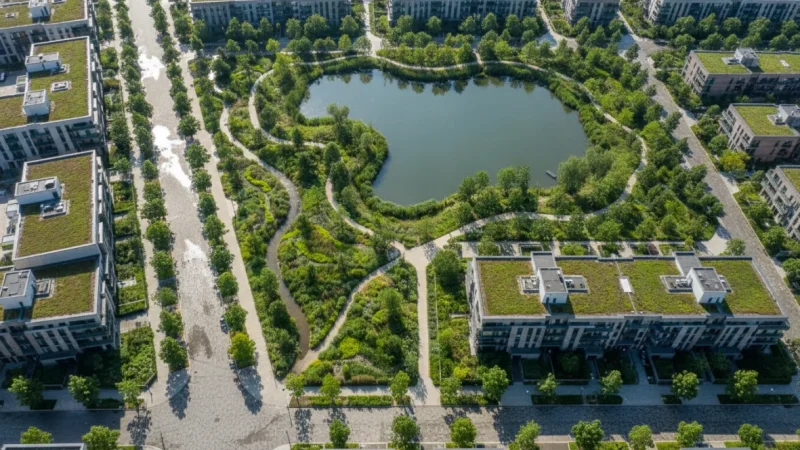
15-Minute City: How Complete Neighborhoods Are Reshaping Urban Living
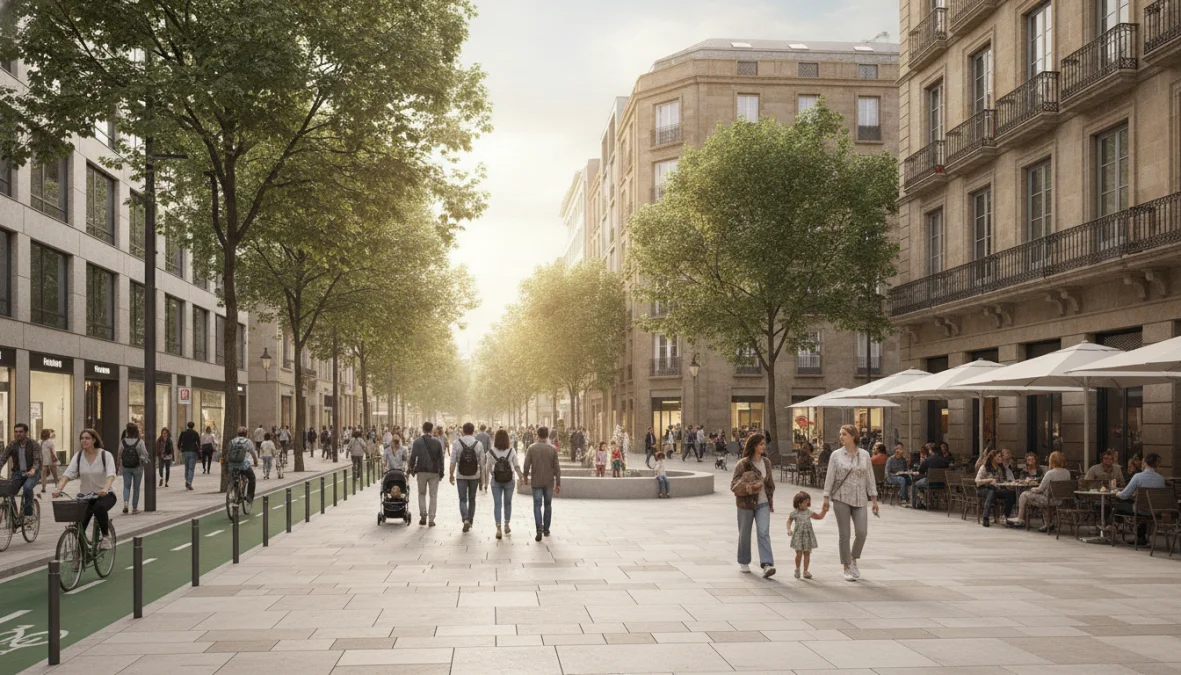
Imagine stepping out your front door and finding everything you need—your office, favorite coffee shop, grocery store, doctor’s clinic, and parks—all within a pleasant 15-minute walk or bike ride. This isn’t a utopian fantasy; it’s the vision behind the 15 minute city concept that’s transforming how we think about urban living. As cities grapple with traffic congestion, climate change, and disconnected communities, this approach to neighborhood design offers a refreshing alternative that prioritizes people over cars and community over commutes.
What Is a 15-Minute City?
The 15 minute city concept, popularized by Sorbonne professor Carlos Moreno in collaboration with Paris Mayor Anne Hidalgo, reimagines urban spaces as networks of complete neighborhoods where residents can access essential services within a short walk or bike ride. This local living concept isn’t about building walls or restricting movement—it’s about bringing life’s necessities closer to where people actually live.
At its core, the 15 minute neighborhood revolves around six essential urban functions: living, working, commerce (shopping), healthcare, education, and entertainment. The goal is ensuring these elements exist in close proximity, reducing dependence on cars and creating more vibrant, connected communities.
Paris has become the poster child for this movement, with Mayor Hidalgo pledging to transform the entire city into a network of 15-minute neighborhoods by implementing cycling infrastructure, pedestrianizing streets, and encouraging mixed-use development. Portland, Oregon, has long embraced similar principles through its “20-minute neighborhoods” initiative, while Melbourne’s “20-Minute Neighbourhoods” strategy demonstrates how this concept adapts to different urban contexts. These aren’t cookie-cutter implementations—each city tailors the framework to its unique geography, culture, and existing infrastructure.
Core Principles and Urban Planning Strategies Behind Complete Neighborhoods
Creating walkable cities requires more than just wishing for shorter commutes. The urban planning strategies behind complete neighborhoods involve several interconnected elements that work together to support sustainable urbanism.
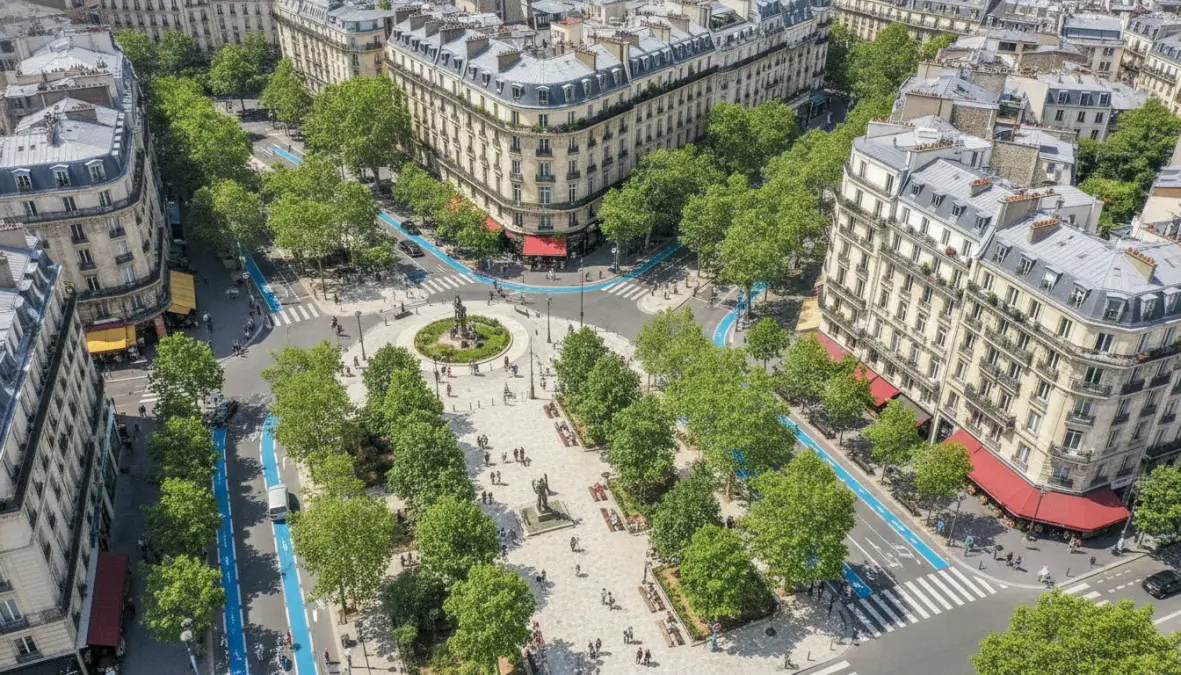
First and foremost is prioritizing active mobility—designing cities for pedestrians and cyclists rather than cars. This means investing in quality pedestrian infrastructure like wide sidewalks, safe crossings, and protected cycling networks. Mixed-use development allows residential buildings to coexist with shops, offices, and services on the same block, creating the density and diversity necessary for vibrant street life.
Successful neighborhood design also requires balanced density—enough people to support local amenities without overwhelming infrastructure. Proximity planning ensures that essential services are strategically distributed throughout neighborhoods rather than concentrated in distant commercial zones. Transit-oriented development connects neighborhoods to broader city networks while maintaining local completeness.
Quality public spaces—parks, plazas, community gardens—serve as the social glue holding neighborhoods together. Green infrastructure not only provides these gathering spaces but also addresses urban environmental challenges, as explored in effective strategies for cooling our cities.
The benefits of implementing these strategies extend far beyond convenience:
- Environmental impact: Reduced car dependency cuts greenhouse gas emissions and improves air quality
- Public health: More walking and cycling increases physical activity while reducing pollution-related illnesses
- Economic vitality: Local businesses thrive when customers live nearby, keeping money circulating in communities
- Social cohesion: Regular interactions in neighborhood spaces strengthen community bonds and reduce isolation
- Resilience: Decentralized services create more robust communities, similar to how decentralized energy systems build resilience
The integration of compact urban design with community accessibility creates neighborhoods where daily life becomes easier, healthier, and more connected—without sacrificing the amenities modern urban dwellers expect.
Implementing the 15-Minute City: Challenges and Real-World Applications
While the 15 minute city vision sounds appealing, implementing these urban planning strategies faces significant practical challenges. Infrastructure transformation requires substantial investment—retrofitting car-centric suburbs with sidewalks, bike lanes, and transit options isn’t cheap. Existing zoning laws often prohibit the mixed-use development essential to complete neighborhoods, requiring regulatory overhauls that face resistance from established interests.
Perhaps most critically, equity concerns arise when implementation drives up property values, potentially displacing the very residents these initiatives aim to serve. Some critics have also mischaracterized the concept as restricting movement, leading to political resistance. Adapting the model to different contexts—from dense European cities to sprawling American suburbs—requires flexibility rather than rigid adherence to a single template.
Despite challenges, real-world applications demonstrate measurable success. Barcelona’s “superblocks” have reduced traffic by 25% and NO2 pollution by 24% in transformed areas. Copenhagen’s investment in cycling infrastructure has resulted in 62% of residents commuting by bike, dramatically reducing congestion and emissions. Singapore’s integrated planning approach combines high-density housing with parks, schools, and clinics within walking distance, achieving high livability in an extremely dense environment.
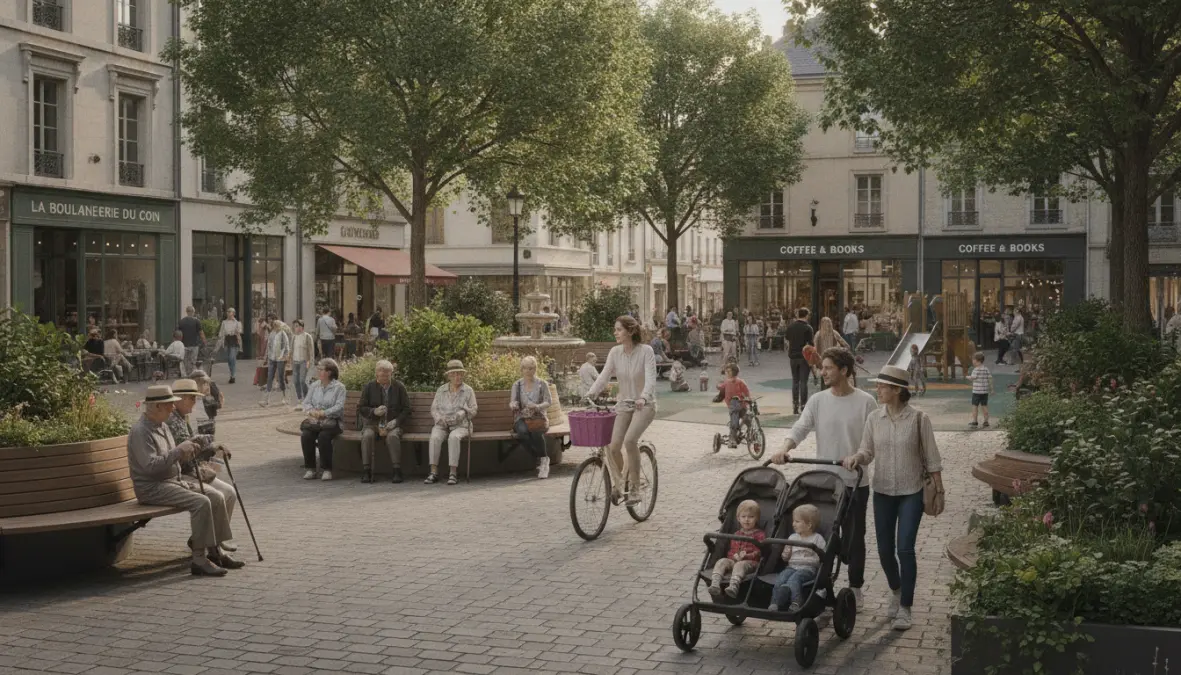
Different city types require different approaches. Major metropolises can leverage existing density and transit networks while addressing equity through inclusionary zoning. Medium-sized cities might focus on transforming specific districts into complete neighborhoods as proof-of-concept. Suburbs face the biggest challenge but can start by creating village-like centers with local amenities and improving pedestrian infrastructure along key corridors.
Looking forward, the trend toward remote work, as discussed in how remote work is reshaping urban planning, actually strengthens the case for 15 minute neighborhoods—when you’re not commuting daily, local neighborhood quality becomes paramount. Innovations like vertical farming in cities could further enhance neighborhood self-sufficiency by bringing fresh food production hyperlocal.
Frequently Asked Questions
Are 15-minute cities realistic?
Yes, but implementation varies by context. Many cities already contain neighborhoods that function this way, and new developments can incorporate these principles from the start. Retrofitting existing car-dependent areas takes longer and requires sustained political will, but cities like Paris and Melbourne demonstrate it’s achievable with proper planning and investment in walkable cities infrastructure.
What are the disadvantages of 15-minute cities?
Main challenges include high implementation costs, potential gentrification when neighborhoods improve, difficulty retrofitting low-density suburbs, and political resistance from those who misunderstand the concept. Some specialized services will always require travel beyond 15 minutes. Success requires balancing local completeness with maintaining broader urban connections through effective transit-oriented development.
Do 15-minute cities restrict movement?
No—this is a common misconception. The 15 minute city concept increases choice by ensuring essentials are nearby while maintaining freedom to travel anywhere. It’s about reducing forced car dependency, not limiting mobility. Cities implementing this model typically expand transportation options through improved cycling networks, transit, and pedestrian infrastructure alongside existing road networks.
How does a 15-minute city differ from traditional urban planning?
Traditional planning often separates uses—residential zones here, commercial there, industrial elsewhere—requiring travel between daily activities. The complete neighborhoods approach integrates these functions through mixed-use development and proximity planning. It prioritizes human-scale design over automobile convenience, emphasizing community accessibility and sustainable urbanism rather than optimizing traffic flow.
The 15 minute city represents more than just an urban planning trend—it’s a fundamental rethinking of how cities can serve human needs while addressing climate challenges and social disconnection. As more cities experiment with these principles, we’re learning that the most livable neighborhoods aren’t those with the fastest highways, but those where life’s essentials are just a pleasant walk away. Whether you’re a city planner, community advocate, or simply someone dreaming of a better neighborhood, the complete neighborhoods movement offers a roadmap toward more sustainable, connected, and human-centered urban living.