Kelp Farming Benefits: How Ocean Agriculture Is Revolutionizing Food Production
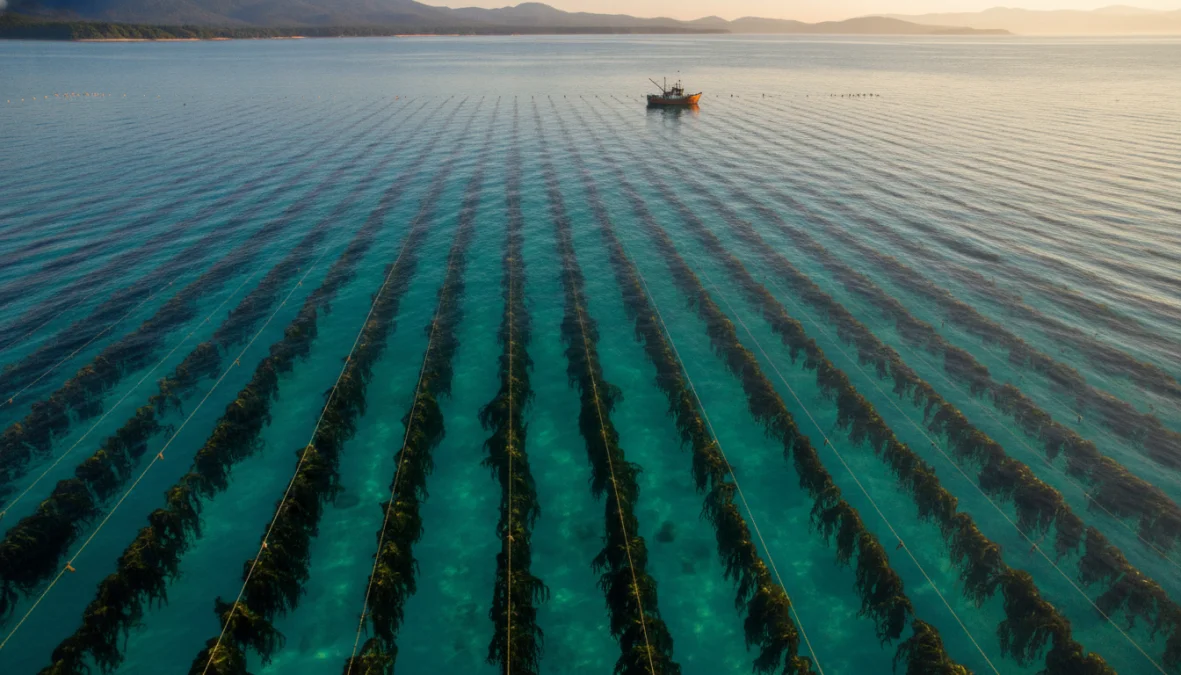
Picture this: vast underwater forests growing at rates that would make any land farmer jealous, absorbing carbon while producing nutrient-packed food, and requiring zero fresh water, pesticides, or fertilizer. Sound too good to be true? Welcome to the fascinating world of kelp farming benefits, where ocean agriculture is quietly transforming how we think about food production and climate solutions.
While vertical farming gets plenty of buzz for urban food security, seaweed cultivation is making waves as one of the most promising sustainable aquaculture practices on the planet. Let’s dive into why ocean crops might just be the superfood solution we’ve been searching for.
What Is Kelp Farming and Why It Matters
Kelp farming is essentially underwater gardening, where farmers cultivate large brown seaweed (primarily from the order Laminariales) in ocean waters. Unlike traditional agriculture that demands vast tracts of arable land, ocean farming utilizes the three-dimensional space of our seas, growing crops vertically through the water column without displacing terrestrial ecosystems.
The kelp farming benefits extend far beyond just producing food. As our planet faces mounting pressure from a growing population expected to reach 10 billion by mid-century, we’re running out of farmable land and fresh water. Meanwhile, oceans cover 71% of Earth’s surface and remain largely untapped for food production. The seaweed cultivation industry has grown by over 8% annually in recent years, with global production exceeding 30 million tons, though most of this comes from Asian countries where seaweed has been a dietary staple for centuries.
What makes kelp agriculture so revolutionary? It requires absolutely no inputs—no fertilizers, no pesticides, no fresh water, and no feed. Kelp simply absorbs nutrients and carbon dioxide directly from seawater while growing at astonishing rates.
How Ocean Farming Works
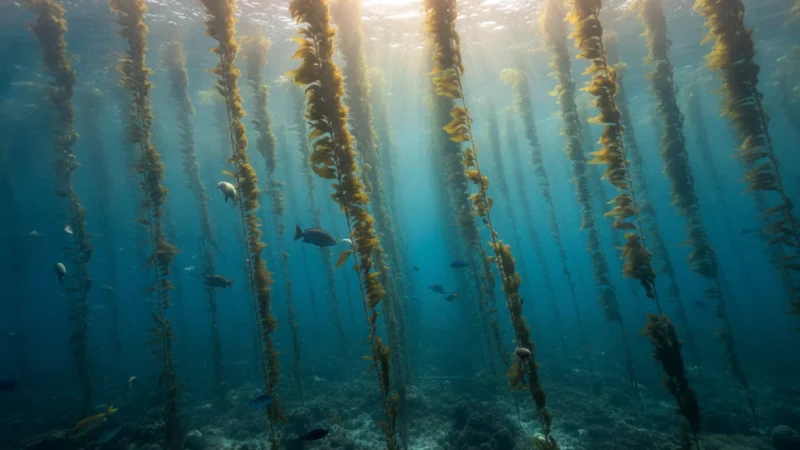
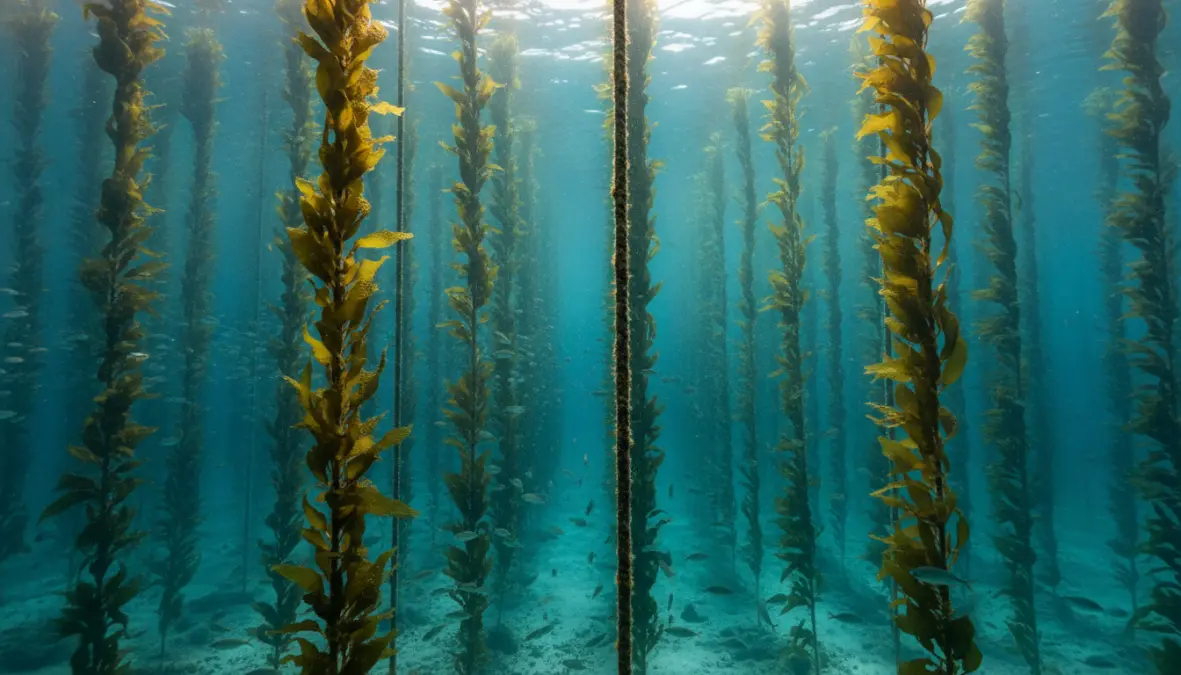
Marine permaculture systems typically use vertical longline techniques. Farmers anchor horizontal lines just below the ocean surface, from which vertical lines hang down into the water column. Kelp spores are seeded onto these lines, usually in late fall or early winter, and the plants grow rapidly through the colder months when nutrient levels are highest.
The speed of kelp production is genuinely impressive—some species can grow up to two feet per day under optimal conditions, reaching harvestable size in just 4-6 months. This makes kelp one of the fastest-growing organisms on Earth, allowing for multiple harvests annually in some locations. Farmers can simply pull up the lines, harvest the mature kelp, and the whole operation is remarkably low-tech and scalable.
Environmental and Nutritional Benefits of Kelp Agriculture
The kelp farming benefits for our planet are staggering. From an environmental perspective, kelp farms function as powerful carbon sinks, with each ton of dried kelp sequestering approximately 2-3 tons of CO2 from the atmosphere and ocean. This makes kelp farming one of the most effective tools we have for carbon capture while simultaneously addressing ocean acidification by absorbing excess CO2 that’s making our seas more acidic.
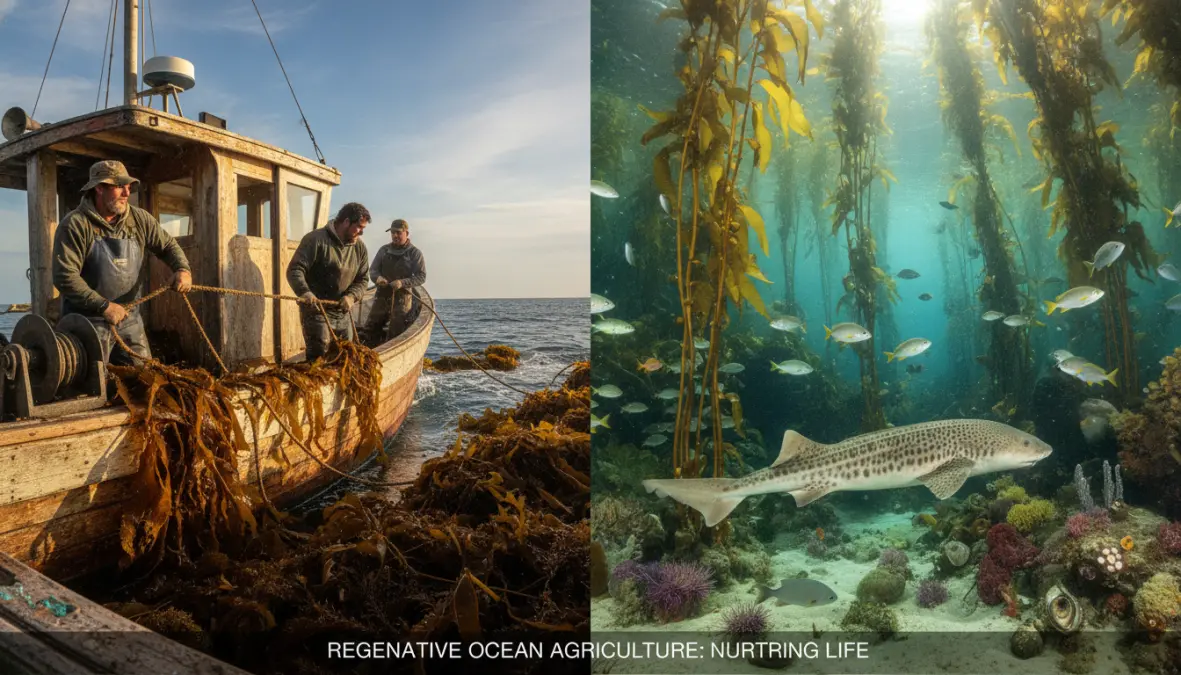
But the environmental advantages don’t stop there. Kelp farms create coastal ecosystems that become thriving habitats for fish, invertebrates, and other marine life. They act as natural water filters, removing excess nitrogen and phosphorus from polluted waters—nutrients that would otherwise contribute to harmful algal blooms and dead zones. This regenerative agriculture approach mirrors principles found in land-based regenerative farming, but with even fewer inputs.
Nutritionally, ocean crops are powerhouses. Kelp contains significant amounts of protein (5-15% dry weight), essential minerals like iodine, calcium, magnesium, and iron, plus vitamins A, C, E, and K. It’s also rich in bioactive compounds with potential health benefits. Compared to traditional agriculture, kelp production uses zero arable land, zero fresh water, and produces zero agricultural runoff—a stark contrast to conventional farming that consumes 70% of global freshwater and is a leading cause of water pollution.
When comparing sustainable aquaculture practices, kelp stands out: cattle farming requires approximately 1,800 gallons of water per pound of beef produced, while kelp requires literally zero fresh water. Similarly, insect protein offers sustainability benefits, but kelp goes even further by actively improving ocean health while growing.
Kelp as a Climate Solution
When we talk about how kelp farming helps climate change, we’re looking at multiple mechanisms working simultaneously. Beyond direct carbon sequestration, kelp farms can help restore the ocean’s natural carbon pump. Some researchers propose farming kelp in vast oceanic areas and then sinking it to the deep ocean floor, effectively locking away carbon for centuries.
Marine permaculture systems also build climate resilience for coastal communities. Kelp forests dampen wave energy, protecting shorelines from erosion and storm damage—benefits that will become increasingly valuable as sea levels rise. The kelp farming carbon sequestration benefits extend to creating a buffer against ocean acidification in localized areas, potentially protecting vulnerable shellfish populations and coral reefs.
Challenges and Future of Kelp Production
Despite the impressive benefits of kelp farming for ocean health, the industry faces real obstacles to widespread adoption. Scaling up kelp production requires significant upfront investment in infrastructure—boats, processing facilities, and specialized equipment. Current regulatory frameworks in many countries weren’t designed with ocean farming in mind, creating permitting headaches for would-be kelp farmers.
The market for kelp products remains relatively limited outside Asia, though this is changing. Processing and transportation costs can be high, and many Western consumers aren’t familiar with seaweed as food. There’s also the question: can kelp farming feed the world? While it certainly can contribute meaningfully to food security and the blue economy, it’s more realistic to see it as part of a diversified food system rather than a silver bullet.
However, the future looks promising. Innovations in automated harvesting, processing technologies, and new product development are making seaweed cultivation more economically viable. Beyond food, kelp is finding applications in biofuel production, bioplastics, animal feed supplements (which can reduce methane emissions from cattle), cosmetics, and agricultural fertilizers.
The economic benefits of kelp farming are attracting serious investment. Projects like GreenWave in Connecticut are pioneering “3D ocean farming” models that combine kelp with shellfish, creating profitable regenerative ocean farms. Norway, Scotland, and other countries are launching large-scale kelp farming initiatives. For those wondering how to start a kelp farm, resources and cooperative models are becoming more accessible, with startup costs ranging from $20,000 to $100,000 depending on scale and location.
FAQ
Is kelp farming profitable?
Profitability varies by location and scale, but kelp farming can be economically viable, especially when combined with other ocean crops like mussels or oysters. Current market prices range from $0.10 to $1.00 per pound for raw kelp, with processed products commanding much higher prices. As markets expand and processing becomes more efficient, economic benefits of kelp farming are expected to improve significantly.
What can kelp be used for?
Kelp has remarkably diverse applications: human food (fresh, dried, or as supplements), animal feed additives, biofuel production, bioplastics, cosmetics, pharmaceuticals, and organic fertilizers. It’s also being researched as a methane-reducing feed supplement for livestock and as a sustainable packaging material.
How fast does kelp grow?
Kelp is one of nature’s fastest-growing organisms, with some species growing up to 2 feet per day under optimal conditions. Most cultivated kelp reaches harvestable size (6-10 feet) in just 4-6 months, making it incredibly productive compared to traditional crops.
Is kelp farming truly sustainable?
Yes, kelp farming is among the most sustainable aquaculture practices available. It requires no fertilizers, pesticides, fresh water, or feed; actively removes carbon and excess nutrients from the ocean; creates habitat for marine life; and can help combat ocean acidification. When managed properly, it’s a genuinely regenerative practice that improves coastal ecosystem health.
As we search for solutions to feed a growing population while healing our planet, kelp farming stands out as one of the most promising prospects in sustainable food production. It won’t replace traditional agriculture entirely, but it represents a crucial piece of the puzzle—one that could help us build a more resilient, regenerative food system. The ocean has been feeding humanity for millennia; perhaps it’s time we learned to farm it properly. Ready to embrace the blue economy? The kelp farming revolution is just getting started.