Solid State Lighting: The Complete Guide to LED Technology and Its Revolutionary Impact
Remember when lighting a room meant screwing in a bulb that burned hot, gulped electricity, and died after a few months? Those days are fading fast, thanks to solid state lighting—a technology that’s not just changing how we illuminate spaces, but revolutionizing energy consumption, design possibilities, and even how we think about light itself. From your smartphone screen to stadium floodlights, solid state lighting has quietly become the backbone of modern illumination, and its story is far from over.
Understanding Solid State Lighting: The Foundation of Modern LED Technology
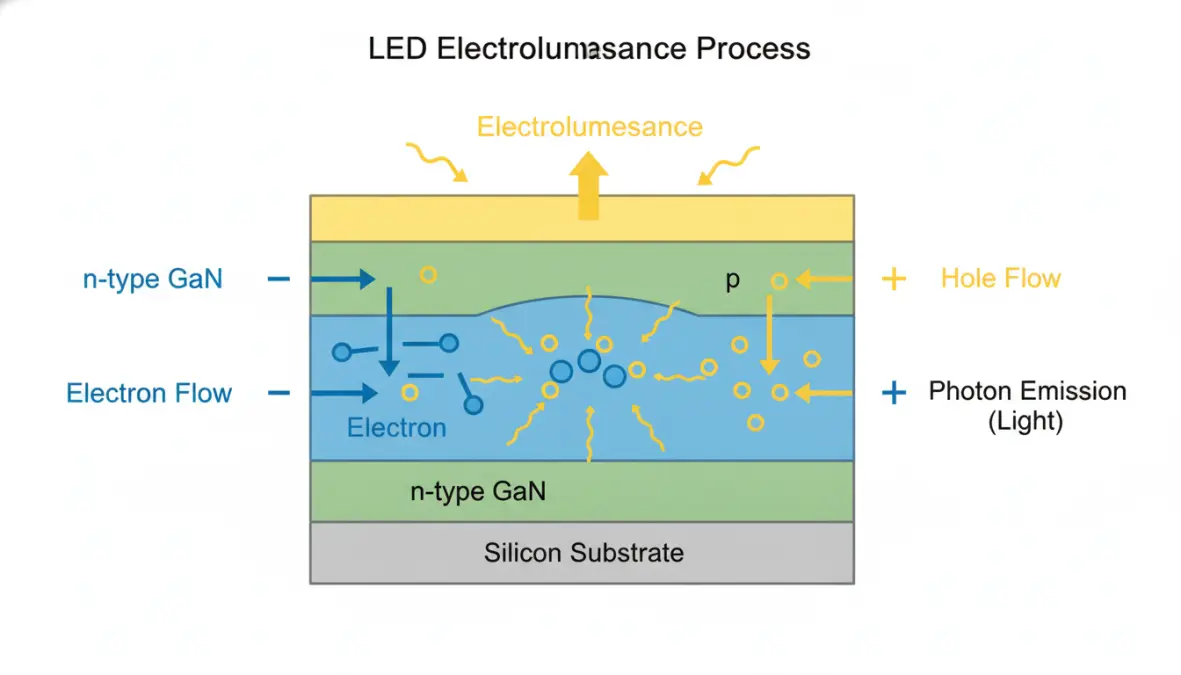
At its core, solid state lighting refers to illumination technology that uses semiconductor lighting rather than heated filaments or gas discharges. Unlike traditional incandescent bulbs (which heat a wire until it glows) or fluorescent tubes (which excite gases to produce light), solid state devices generate light through a phenomenon called electroluminescence—when electrical current passes through semiconductor materials, electrons release energy in the form of photons.
This fundamental difference makes all the difference. LED technology, the most common form of solid state lighting, converts electricity directly into light with minimal heat waste. Think of it like the difference between rubbing sticks together to make fire versus flipping a switch. The semiconductor materials—typically compounds like gallium nitride (GaN)—are engineered at the molecular level to emit specific wavelengths of light when energized.
The advantages over traditional lighting are staggering: no fragile filaments to break, no toxic mercury like fluorescents contain, dramatically less heat generation, and luminous efficacy that can exceed 150 lumens per watt (compared to just 15-20 for incandescent bulbs). Plus, because there’s no combustion or degradation of materials, light emitting diodes can last 50,000 hours or more—that’s nearly six years of continuous operation.
LED Evolution: From Early Prototypes to Advanced Solid State Lighting Systems
The journey of LED evolution reads like a tech thriller. When Nick Holonyak Jr. created the first practical visible LED in 1962, it emitted a weak red glow—useful for indicator lights but hardly revolutionary. For decades, LEDs remained niche products: those little red dots on your stereo equipment and not much else.
The real transformation came through incremental LED advancement: orange LEDs in the 1970s, green in the 1980s, and then the game-changer—blue LEDs in the 1990s. Why did blue matter so much? Because combining blue LED light with yellow phosphor coating creates white light, finally making solid state lighting systems viable for general illumination. This breakthrough was so significant that its inventors won the Nobel Prize in Physics.
Since then, LED illumination has improved at a blistering pace. Efficacy has roughly doubled every decade, costs have plummeted by over 90%, and the color rendering index (CRI)—how accurately colors appear under the light—has improved from a dismal 65 to over 95 in premium products. Today’s LEDs can reproduce virtually any color temperature, dim smoothly, and integrate with smart home systems, features that would’ve seemed like science fiction to early researchers.
Key Technological Breakthroughs in Semiconductor Lighting
Several pivotal innovations propelled semiconductor lighting from laboratory curiosity to global standard. The development of phosphor coating technology transformed monochromatic LEDs into white light sources by converting some of the blue light into broader spectrum illumination. Engineers discovered that layering specific phosphor compounds over blue LEDs could create warm, neutral, or cool white tones.
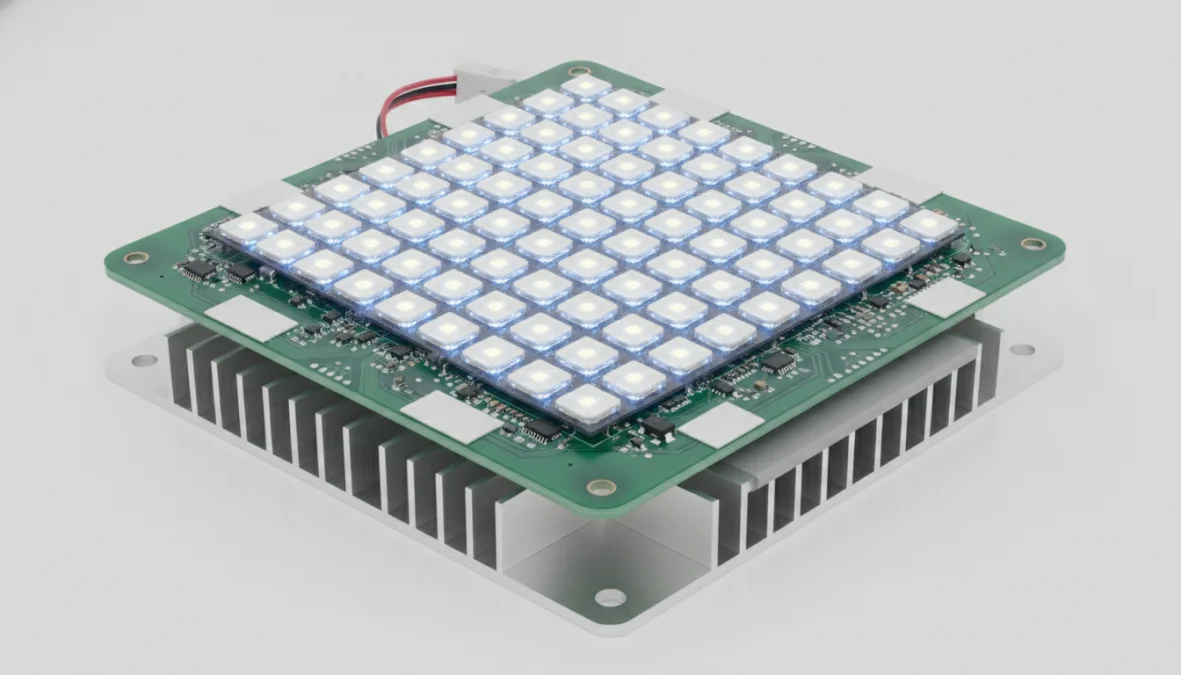
Thermal management represented another critical breakthrough. Early LEDs failed quickly because heat buildup degraded the semiconductor junction. Modern designs incorporate sophisticated heat sinks, aluminum cores, and engineered optical efficiency to channel heat away from the LED chip, dramatically extending lifespan and maintaining brightness.
Advanced driver circuits also transformed LED performance. These electronic components regulate current and voltage, enabling features like dimming, color tuning, and protection against power fluctuations. Without sophisticated drivers, LEDs would flicker, fail prematurely, or provide inconsistent light quality—making them unsuitable for serious applications.
Energy Efficient Lighting: The Performance Revolution
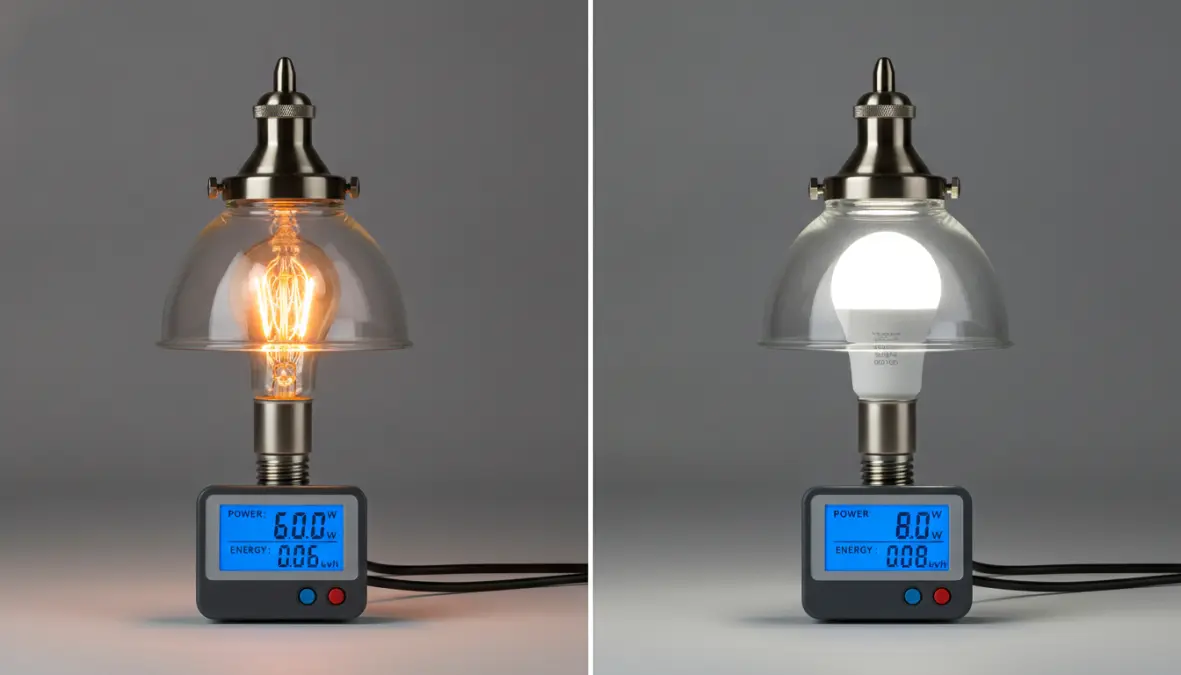
The numbers tell a compelling story about energy efficient lighting. A typical 60-watt incandescent bulb produces about 800 lumens while consuming—you guessed it—60 watts. An equivalent LED? Just 8-10 watts for the same brightness. That’s 80-85% energy savings, which translates to massive reductions in electricity bills and carbon emissions.
When you factor in longevity—LEDs lasting 25-50 times longer than incandescent bulbs—the economic case becomes overwhelming. A solid state lighting installation might cost more upfront, but the return on investment typically occurs within 1-3 years for commercial applications and 2-5 years for residential use. In industrial settings with 24/7 operation, the payback period can be measured in months.
The environmental impact extends beyond just energy savings. Reduced electricity demand means less strain on power grids and fewer fossil fuels burned for generation. Some estimates suggest widespread LED adoption could eliminate the need for dozens of new power plants globally. Similar to how innovations in clean energy technologies are reshaping our power infrastructure, LED lighting is transforming consumption patterns on the user end.
The Future of Solid State Lighting and Emerging Applications
If you think LED technology has peaked, think again. The frontier of solid state lighting is exploding with innovations that blur the lines between illumination and other technologies. Micro-LED and mini-LED displays promise unprecedented screen quality with individual pixels measuring just micrometers across. These aren’t just incremental improvements—they’re enabling flexible, transparent displays that could turn any surface into a screen.
Li-Fi technology leverages the rapid switching capabilities of LEDs to transmit data through light waves, potentially offering faster, more secure wireless communication than radio-based Wi-Fi. Imagine downloading a movie in seconds simply by sitting under a ceiling light, or hospitals using LED illumination to provide both lighting and data connectivity without electromagnetic interference.
Human-centric lighting represents another frontier, with energy efficient lighting systems that automatically adjust color temperature and intensity to match our circadian rhythms. These systems, as explored in research on circadian lighting benefits, can boost productivity during work hours and improve sleep quality at night—turning light into a wellness tool rather than just a utility.
In agriculture, LED technology is enabling vertical farming operations where precisely tuned light spectra optimize plant growth while minimizing energy costs. UV-C LEDs are revolutionizing disinfection in healthcare and water treatment, providing chemical-free sterilization. The photonics research behind these applications continues to expand what’s possible with engineered light.
Emerging materials like quantum dots and perovskites promise even greater efficiency and color accuracy, while organic LEDs (OLEDs) are already transforming display technology and could eventually create paper-thin, flexible lighting panels. The convergence of solid state lighting with IoT, AI, and advanced materials science suggests we’re still in the early chapters of this revolution. Much like how solid state battery technology is reimagining energy storage, solid state lighting continues to redefine what’s possible with photons.
The shift from burning filaments to precisely engineered semiconductors represents more than just better bulbs—it’s a fundamental transformation in how humans interact with light. As solid state lighting becomes smarter, more efficient, and more integrated into our built environment, it’s not just illuminating spaces. It’s illuminating possibilities we’re only beginning to imagine.